
I read for work—student manuscripts, manuscripts for Crux and DIAGRAM, manuscripts of people who ask for blurbs, and from friends who need a sounding board. These books are sometimes better than the books I read for fun. Maybe being an editor/mentor has changed me so much that reading published books seems too easy? Too finished and therefore become mere objects? Perhaps it’s that I listen to too many audiobooks from Libro.FM. But at the end of the year, I’d download a new book and be like, what is this travesty of justice? Why aren’t my friends’ and students’ books getting published more? Perhaps the Big 5 has led to a dullification of the novel, but I sometimes found it true of the nonfiction too.
But I must read more and more often. The news is bad. Book reading in the US has dropped to an all-time low. Who is going to buy and read these books if not me (and by me, I mean us)?
The books I loved were ones of big scope—2666, Middlemarch, The Secret History, Barkskins, Underworld—Do indie presses publish such long books? Perhaps I don’t know.
I loved all of the Independent Press books I read. These I read by eye not ear.
Secret Agent Man Margot Singer
Excellent collection of essays about a father who may be a spy and other subject, like the essay “Call It Rape.” The essays connect by considering what it means to look and to name.
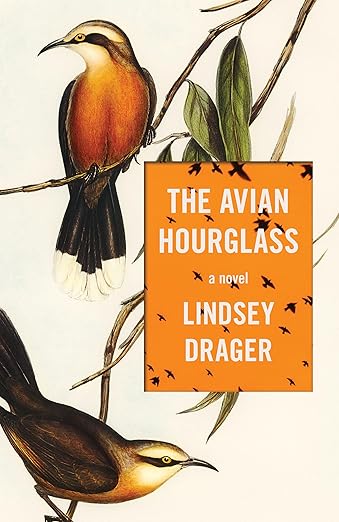
The Avian Hourglass Lindsey Drager
One of my favorite books ever. A world without birds. Tragic and yet the people Drager makes live here have spirit even without the most elemental animals.
The End of Tennessee Rachel Hanson
Good book about a woman leaving her fundamentalist household. She is wracked by guilt for leaving her siblings behind.
Entwined Bridget Lyons
Excellent book about specific animals and how they are responded to climate change.
Field Guide to the Subterranean Justin Hocking
Fascinating book about the darknesses of human actions and earth’s underground spaces.
College Girl Laura Gray-Rosendale (re-read and taught)
A rape rendered in distressing detail, Gray-Rosendale uses the writing of her own story to both heal and to understand how writing works.
Braiding Sweetgrass Robin Wall Kimmerer (re-read and taught)
Western academic ecology interwoven with Indigenous knowledge. Obvs very brilliant.
Blanket KT Thompson (re-read and taught)
Excellent book about blankets, what they cover, what they reveal, Native American History/Personal History
Bigger press books read by eye:
The Bluest Eye Toni Morrison (re-read)
This book is actually super weird. The POV moves around so much. Very strange/interesting to have one of the POV’s be by a man who rapes his daughter.
The Mighty Red Louise Erdrich
A cool river and farm and animals dying mysteriously. I liked this much better than The Sentence but not as much as The Night Watchman
Dust Alison Stine
Excellent book about a girl dragged to a very small, dusty town. She’s not allowed any freedom except at the café where she takes refuge.
The Bean Trees Barbara Kingsolver (re-read)
Turtle is kind of abducted! Didn’t quite realize it the first time. A little more complainy than I remember.
Salt Bones Jennifer Gavin
Mystery and the Salton Sea! What more could you want? Generational misunderstandings and missing women.
Mother Trucker Amy Butcher
Very interesting to read after having just returned from the Haul Road in Fairbanks
Heavy Kiese Laymon (re-read and taught)
This book is so embodied. Written in the second person, ostensibly to his mother, Laymon puts gravity in every detail.
I list these audiobooks basically in reverse chronological order. I was super annoyed by Flesh. Find further annoyances below.
Flesh David Szalay
If the author cut “okay” from the dialogue, this book would have saved a lot of paper. I’m glad the title was “Flesh” so I could understand that the protagonist, this very boring guy, was driven by bodily pursuits. Why even have him talk?
One Day, Everyone Will Have Been Against This Omar El Akkad
Great and hard and necessary. See substack.
The Light Eaters Zoë Schlanger
So fantastic. Plants aren’t human but they still show kinds of intelligence.
Circe Madeline Miller
Loved. Came late to this. Actually about Circe, but her side of the story. True witchery!
Last Night in Montreal Emily St. John
Kind of annoying book about wayward twenty-year olds. The Lolita allusions felt over-the-top.
What We Can Know Ian McEwen
Part 1 is about living in a flooded planet 2120 and trying to be a literature professor. Part 2 is about the wife of a poet who wrote her own memoirs. The parts do not shine light upon one another. Annoyed.
When We Cease to Understand the World Benjamin Labatut
Great book about uncertainty and principles and fictionalized stories about Heidegger and Schrödinger.
Into the Clear Blue Sky Rob Jackson
Focusing primarily on methane, Jackson uncovers ways we can prevent greenhouse gases from escaping into the atmosphere. Very good.
The Old Ways Robert MacFarlane
Dude walks around England. Could not finish.
Magical/Realism Vanessa Angélica Villareal
Incredibly smart and readable understanding of how pop music, gaming, and Game of Thrones play into our understanding of literature. Brilliant.
Fuzz Mary Roach
Excellent fun times thinking about how animals get into trouble, often because humans are in their way.
Prophet Song Paul Lynch
Darkest book ever but also spot on for the US if we don’t stop the fascism now. S
Bottoms Up and the Devil Laughs Kerry Howley (reread but I didn’t know it until halfway through)
Reality Winner’s disillusionment with the government leads to her to share one small piece of classified data. She gets punished in ways far beyond usual. Also, it’s The Intercept’s fault for not scrubbing identifying material.
Dream Count Chimamanda Ngoza Adichie
Very good. Four-POV’s about Nigeria and Washington DC, love, feminism, body autonomy.
The Frozen River Ariel Lawton
18th Century Mid-wife with very modern viewpoint. Writing is strained.
Raising Hare Chloe Dalton
Fave book of the year. See above.
The Time of Our Singing Richard Powers
Long book about 1940s singing. I didn’t finish even though I love Richard Powers. He should blurb my novel!
Tiny, Beautiful Things Cheryl Strayed
I hadn’t read this collection of dear Sugar columns. Sweet.
Orbital Samantha Harvey
Fine. I don’t remember much about it. Sometimes, I wonder about The Booker Prize
Boys and Oil Taylor Brorby
Excellent book about growing up in oil country and surviving.
Careless People
Awesome book about Facebook and how a senior exec came to find it reprehensible.
Weather Jenny Offill
Short book. Quite lovely though I don’t remember much.
Silent Spring Rachel Carson
I can’t believe I hadn’t read this. So beautifully written and so disturbing. The problem isn’t just DDT though. The pesticides we continue to use continue to kill everything around us.
Black Reconstruction in America WEB Dubois
Also can’t believe I haven’t read this. Clarifies how racism was instituted after the Civil War. People, especially poor, white people, were driven to be racist to hold onto any glimmer of power they had.
The Safekeep Yael Van Der Wouden
Omg. So boring. Almost died. Old timey people in cars. Annoyed.
Twist Colum McCann
Cables on the seafloor. Intrigue on the High Seas. Not my kind of book.
On Tyranny Timothy Snyder
Required reading for this year
Whale Fall Elizabeth O’Connor
Hmm. Ocean involved? The eating of a beached whale?
Cold Crematorium: Reporting from the Land of Auschwitz Józeph Debreczeni
Cold and hard story from the “sickhouse” at Auschwitz. Necessary.
The Color of Water: A Black Man’s Tribute to his White Mother James McBride
Lovely reflections about color. I don’t remember that much.
Tom Lake Ann Patchett
Cherry trees and daughters. Kind of just beautiful.
Playground Richard Powers
OMG. A story that is very maddening at the end. Good though.
A Thousand Splendid Suns Khaled Hosseini re-read.
Important book for 2025
Everything is Tuberculosis John Green
Title is self explanatory. I’m reading it again right now. I bought it for 3 people for Christmas. I’m teaching it for my climate science class.
Palaver Bryan Washington
Pretty good. Gay son deals with Jamaican mom who now lives in Houston while she visits him in Tokyo.
Underworld Don DeLillo
I started this book 20 years ago and then was like, I don’t want to read a book about a baseball. The book isn’t really about a baseball, except that the book really is about a baseball. I liked it but thought it was annoyingly hyper realistic.
The God of the Woods Liz Moore
OK. Camp counselors and lost children. Mostly a mystery/thriller, which I don’t generally prefer.
The Ministry of Time Kaliane Bradley
I LOVED this book about time travel. The protagonist is a handler for a man transplanted from 18 something to current times. Might read again soon.
The 1619 Project
A must read for 2025. Should have read sooner.
The Secret History Donna Tartt
This was my year for long books. I really liked the intricacies of these screwed-up kids who really screwed up.
Whisky Tender Deborah Taffa
Smart description of being torn between many cultures. Great, place-based insights into Latino and Indigenous communities.
The Antidote Karen Russell
Interestingish because there’s a witch and a dustbowl, but super shallow. I read that the book is meant to be as deep as YA, which seemed unfair to YA. With Swamplandia, I will never forget the bad man rowing through the swamps. Everytime I paddleboard, I think of him. I might remember one jump shot the main character takes. And some dust.
On Time and Water Andri Snaer Magnason
Glaciers and melting and sadness and hope.
The Fraud Zadie Smith
Libro.fm says I listened to this book but I do not remember a thing.
Barkskins Annie Proulx
Maybe one of my favorite books ever. I listened to this one too and remember everything. (I’ll try the Zadie Smith again). Pretty much the tale of the Eastern United States through the POV of mowing down trees (and people) for profit. So good and very long.
Nightbitch Rachel Yoder
Woman has a baby. The complete inside-outing of her body and the needs this new creature freak her out. Very right on.
The Horse Willy Vlautin
A man lives way out of town. He’s too old to be doing such things. He tries to save his horse. Very good. My friend Lynn knows him!
Creature Lake Rachel Kushner
Pretty OK book about a guy who lives in a cave and people have to think about him and his thoughts.
This Strange Eventful History Claire Messud
Following the lives of a marriage, children, Algiers, WWII. It was fine.
West with Giraffes Lynda Rutledge
Writing very cheeky and flamboyant but chasing giraffes is always fun.
The Quickening Elizabeth Rush
Pregnant woman. Climate change. On a boat on the way to Antarctica. Pretty good.
How Beautiful We Were Imbolo Mbue
Fighting against oil companies is always a good idea.
The Great Believers Rebecca Makkai
1980s. Art. Friends up to no good. A bit like A Little Life but way less melodrama
Middlemarch George Eliot
Why didn’t I read this 1000 years ago? Like DeLillo, she’s interested in details. Unlike DeLillo, she doesn’t want to batter us over the head with them (I liked the DeLillo! It was just a lot).
2666 Roberto Bolaño
Finally read this. Very long. Also, like DeLillo, many details although these details felt a little more salient. Many countries. Many people. Many dead women in St. Teresa/Juarez. Very good. Glad I survived.
 Nicole Walker