Country Roads Took Me Home

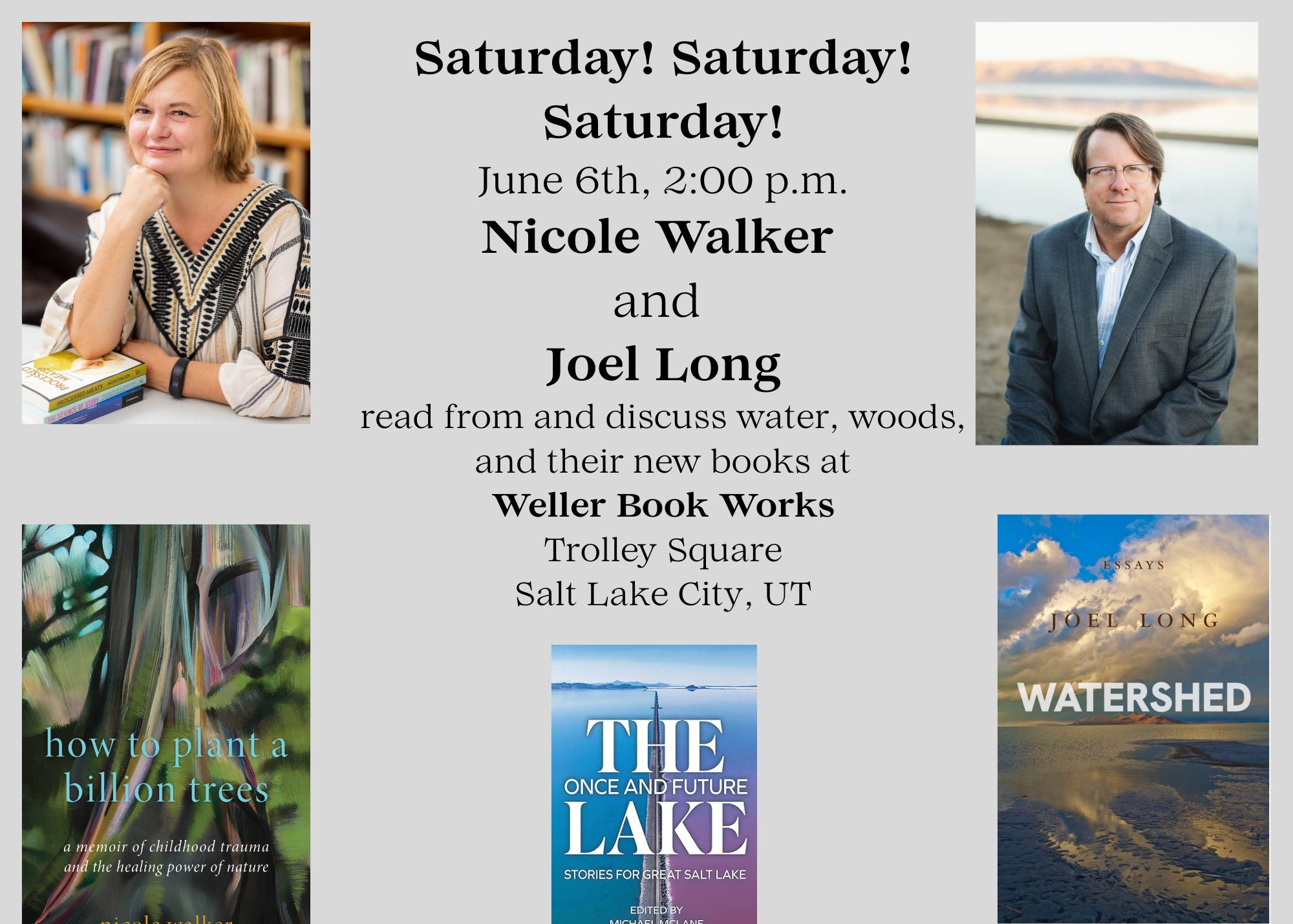
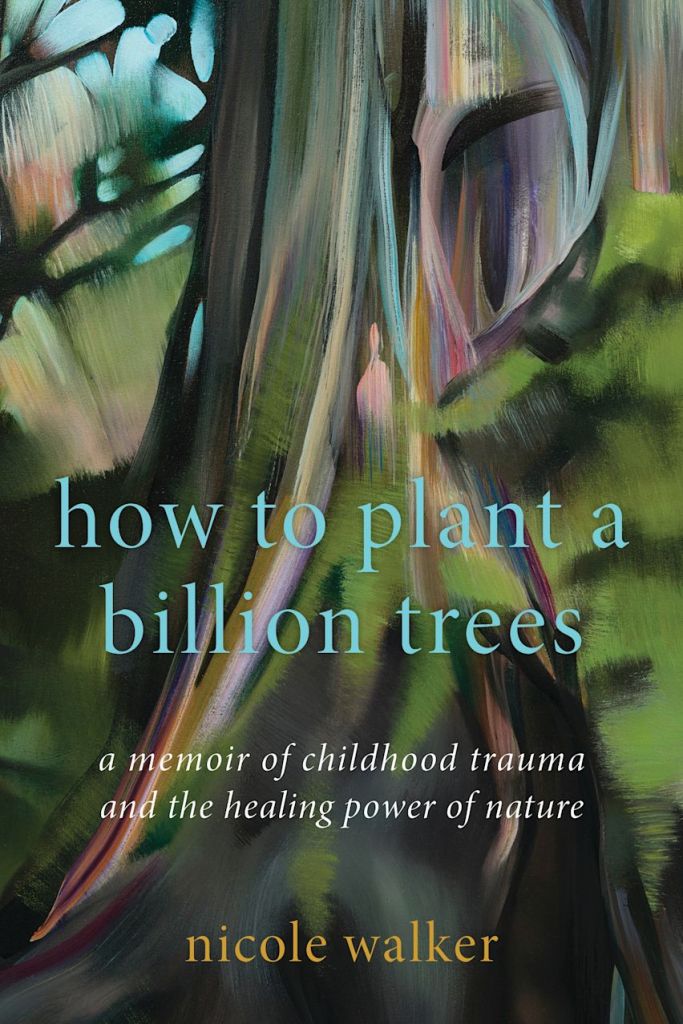
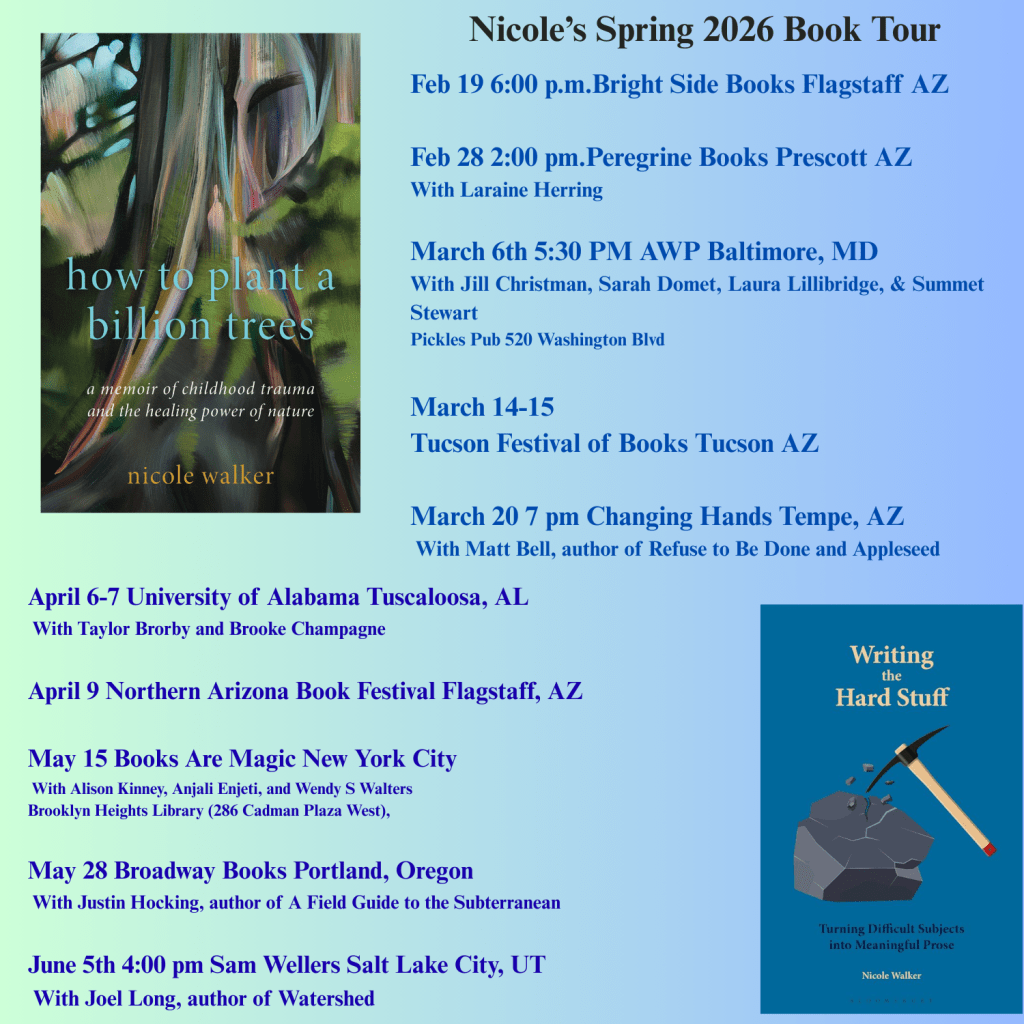
The final event of How to Plant a Billion Trees’ book tour, at least for this leg, was on Saturday at Weller Books at Trolley Square.

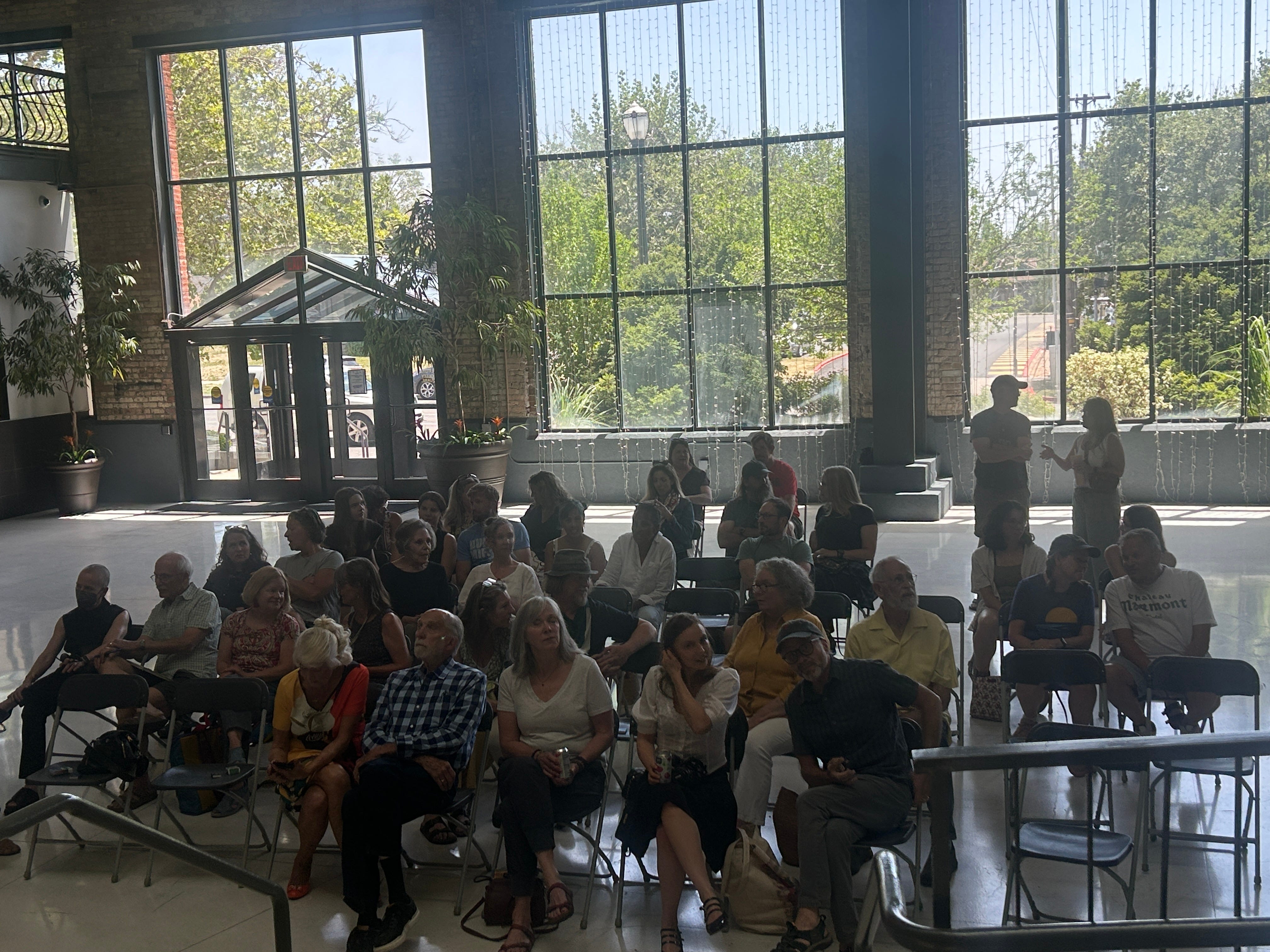
I’ve loved both these places since I was a kid. I also love the Desert Edge pub where, unlike everything else in SLC, the rare roast beef and swiss hasn’t changed. It was there that the power went out. I also got an email from Weller’s. We’d have to cancel the event. I ran down to the bookstore to see what we could do. The door was shut. A sign said, closed do to power outage. I texted Joel Long, “ACK!” He texted back, “Double ACK. I’ll be right there.” I knocked on the door. He asked, “Yes?” I said, “I’m Nicole. Ack! Is there anything we can do? to keep the reading happening. I know a bunch of people are coming. Ack!” He, dear reader, did not compare me to the Aflac duck for speaking in ACKS! He looked at his iPad. He said, “I have square.” “Can we read out in this huge atrium-like foyer to Trolley Square?” He said, “We can.” “Do you have chairs? We can help you set them up.” He said, “We have a whole cart on wheels with chairs!” They rolled the chairs out. They set them up. People started coming in. We needed more chairs.

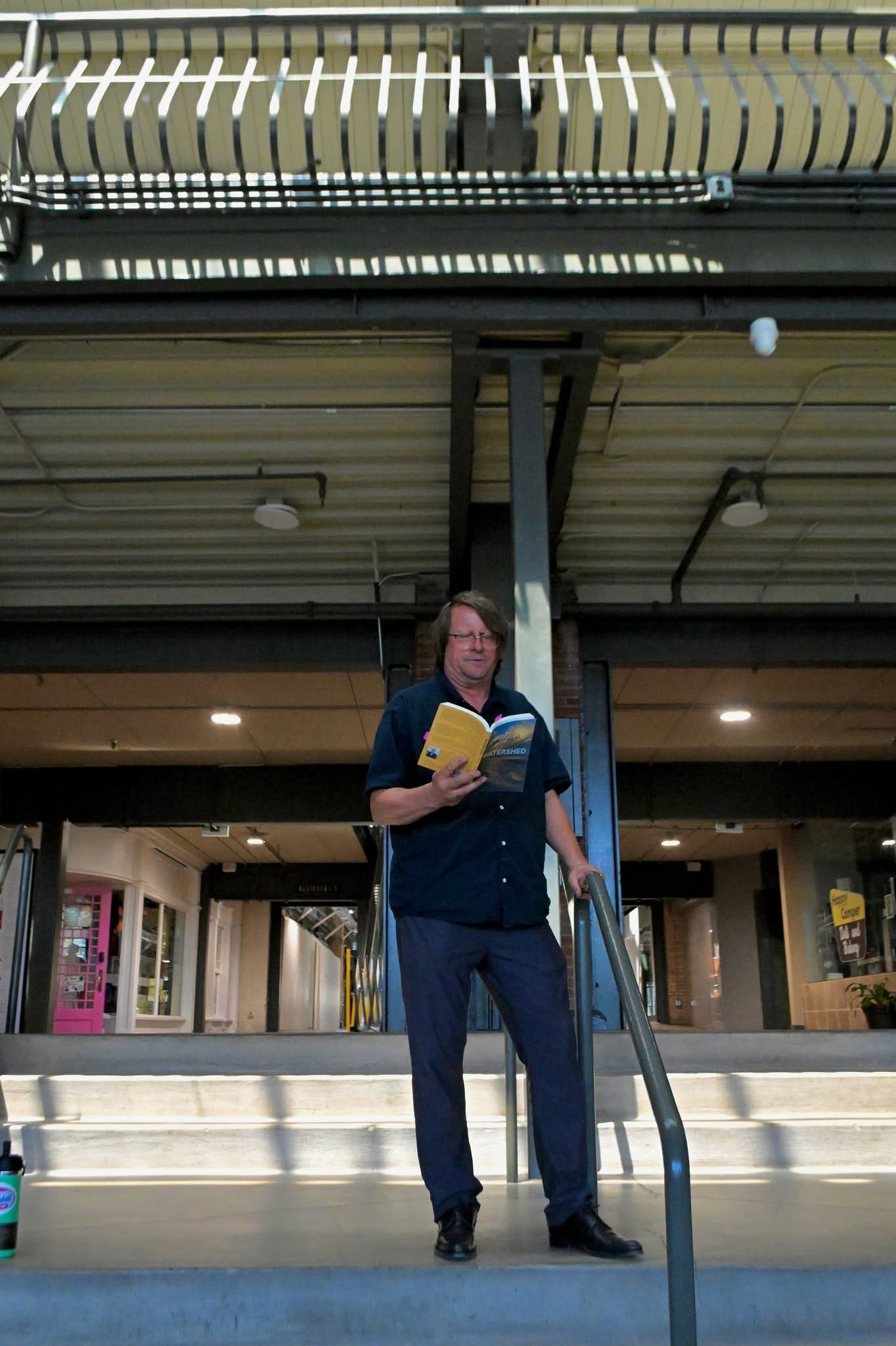
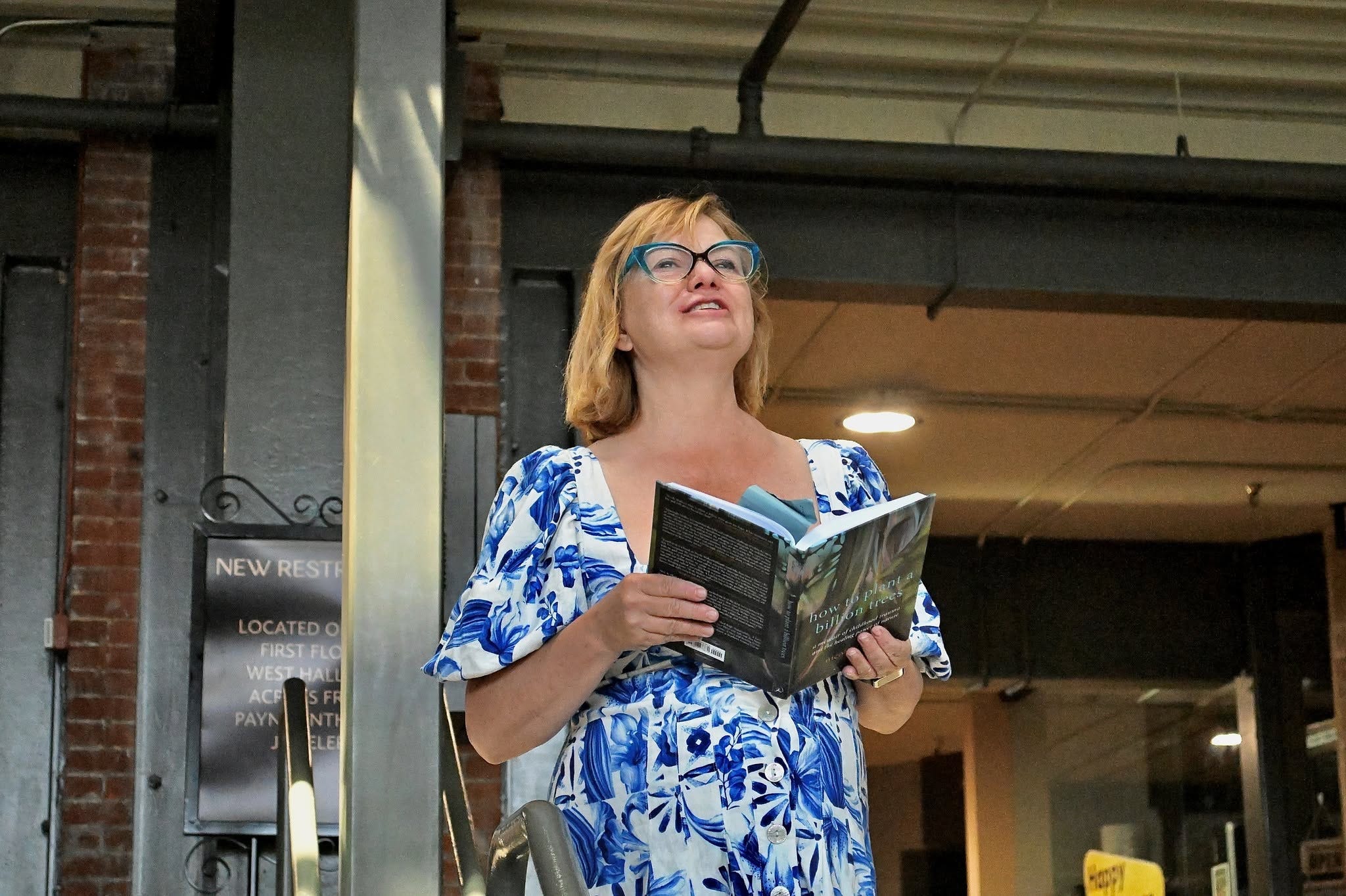
Joel and I stood on the stairs we’d made a stage and read from our books. Joel read about the Great Salt Lake and the most beautiful night with the most beautiful people and my cousin and his best friend’s dog, who died at twelve weeks because she was born without kidneys.

I read about my dog who died last week and a time where she was very much alive when she and I nearly drowned in a paddle board emergency.

As we read, the Trolley Square tiny train made the rounds (battery operated? Maybe.) The Old Spaghetti Factory rolled carts of pasta through our makeshift stage. I suggested we turn Trolley Square into an arts venue. I yelled out to my sister Valerie Walker, “We could do flash mobs right here in the foyer.” She yelled back, “Right now?” “Well, maybe later!” The power came back on and music blared. Joel and I signed books. My dear mentor and friend Katharine Coles joined a bunch of us for drinks after the reading. We reminisced about the old Trolley Square. Chalk Garden and JMR and Greenstreet. The reading was a bit of a disaster and it was indeed the best reading of my life because it was here at home, because it was with my dear friend Joel, and because my family and friends were there. And because it was at Trolley Square and Weller Books–who I thank forever for making it happen.

(Photos of Joel and me thanks to Sarah Long).

How to try to get your forthcoming book attention in 4,231 simple steps

  1. Two years before you write the book, get your mother to plant amaranth. Amaranth crops sustained people all the way from Guatemala to the southwest. The staple grain has more protein than quinoa and requires just 2 millimeters of water to survive. Colonialists stamped out the fields to force Indigenous people to rely on European, water-needy crops, like wheat.
  2. Publish an essay in the New York Times that goes semi-viral. Assume this will make it easy to sell your book. Feel betrayed by both asses and u and me.
  3. Campaign for reproductive rights in Florida, DC, and Arizona—the rendered experience becomes the ending for the book that will become How to Plant a Billion Trees,
  4. January 2025. Find the kindest agent in the world. One that doesn’t mind if you email her five asking if she’s heard anything since going on submission earlier that same day.
  5. Wait with agent. Try not to think what presses will say yes.
  6. Or manifest: Try very hard to think about presses will say yes.
  7. Zoom with your agent and a few presses.
  8. Post about the process on FB, including the press that wanted me to have 100,000 followers on Substack. (I have 100!)
  9. Freak out when two different arms of Bloomsbury say yes to two different books. So exciting! Also, how will you finish two books in a year?
  10. Fortunately, How to Plant a Billion Trees was nearly finished. Writing the Hard Stuff was sold on proposal. Fortunately, it’s about the writing of How to Plant a Billion Trees, which you had just finished, so now you can write the Writing the Hard Stuff book which is due September 1.
  11. Put together a panel called Writing the Hard Stuff with colleagues and graduate students for the Desert Nights/Rising Stars conference in Phoenix.
  12. Submit companion essay. Publish in Craft!
  13. Be grateful you’re invited to present on two AWP panels: Writing Gender-Based Sexual Violence Is Difficult Enough, So How Do We Teach It? And Writing Unashamed: On Resisting Shame & Silencing.
  14. Write like the wind!
  15. Travel through the west for research about an entirely different, future book.
  16. Revise Billion Trees, especially chapter 4, thanks to advice from editor.
  17. Travel to Alaska for research about an entirely different, future book.
  18. Be grateful AWP panels are accepted.
  19. Submit both books to Bloomsbury
  20. Attend Sex Trafficking conference to understand how to give some context to A Billion Trees.
  21. Ask mother-in-law to harvest amaranth.
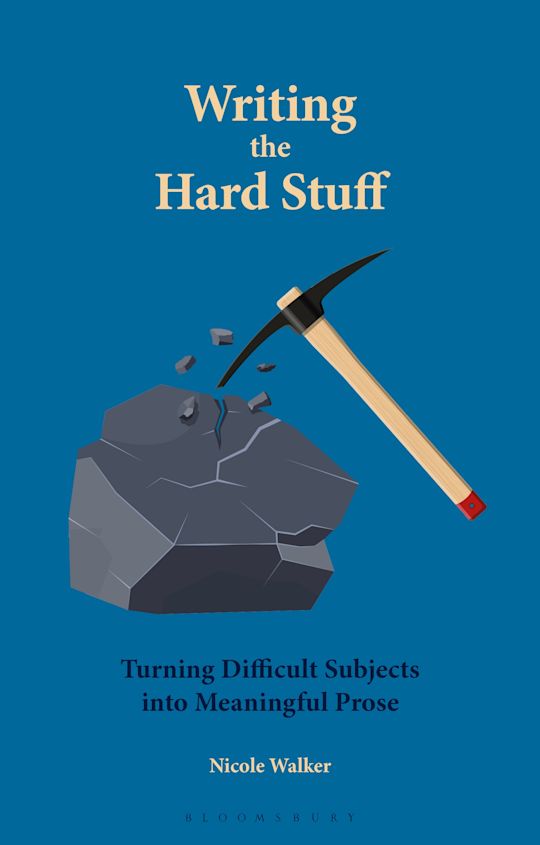
  22. Writing the Hard Stuff is to come out on November 27th. Thanksgiving Day.
  23. Talk with your who have hired publicists. Wonder if it’s a good idea. Look at bank account. Friend gives great advice about podcasts and bookstores. Think, “I can do this myself.”
  24. Post cover of Writing the Hard Stuff.
  25. Write column about Writing the Hard Stuff
  26. Forget that one has three other jobs besides being publicist for one book.
  27. Bring postcards to Desert Nights since Writing the Hard Stuff isn’t released yet. Make postcards as substitute.
  28. Teach the ideas around Writing the Hard Stuff. Students write an object lesson and braided essays. Share publishing process with students—hope both are useful!
  29. Start contacting friends with whom you’d love to present at bookstores.
  30. Copyedit first and only draft of Writing the Hard Stuff
  31. Email bookstores to see if I can read with friends over the next few months.
  32. Submit companion essay to the New York Times. Place it in Brevity!
  33. Buy a 3-day subscription to Listen Notes to search for podcasts that might be interested in interviewing you.
  34. Draw up list of potential blurbists.
  35. Write to potential colleagues at campuses across the country about book to ask about visiting their colleges.
  36. Email editors almost as often as you once did agent to see who is going to blurb the book.
  37. Start a Substack.
  38. Zoom with publicist who will help get the word out about the book. Hope he has the strength and connections.
  39. Worry about blurbs.
  40. Write Substack post about Donald Trump being a sex Trafficker.
  41. Meet with greenhouse manager about collecting trees to give away at readings
  42. Copyedit the first draft of A Billion Trees.
  43. Order matchbooks with the cover of A Billion Trees. Stuff some of them with pinenuts. Some with amaranth. Leave most matches to distribute at book events.
  44. Substack post about writing postcards to potential voters in red counties.
  45. Check in with book events hosts and co-authors.
  46. Read books of friends with whom you will read at book events.
  47. Copyedit second draft of a Billion Trees.
  48. Substack post about witches.
  49. Email publicist, marketer, editors about plans for the release of A Billion Trees.
  50. Email potential blurbists.
  51. Post cover of ABT without blurbs.
  52. Worry about blurbs.
  53. Substack about the terrible film After the Hunt
  54. Email publicist, marketer, editors about plans for the release of A Billion Trees.
  55. Proofread 1st round.
  56. Substack about One Day, Everyone Will Have Been Against This
  57. Make digital postcard for book tour.
  58. Email editors of Writing the Hard Stuff about marketing plans.
  59. Substack about Wright Thompson’s The Barn
  60. Proofread A Billion Trees. 2nd round.
  61. Post cover of ABT.
  62. Write Bio Mass Index email to editors.
  63. Joyful thank you to blurbists.
  64. Proofread A Billion Trees 3rd and final round.
  65. Email publicist, marketer, editors about plans for the release of A Billion Trees.
  66. Collect books of fellow authors to read for book tour and Zoom talks.
  67. Write 3 companion essays
    1. Girls Are Not Your Millennium Falcon
    1. Look Down. Look Around. Look Everywhere.
    1. Impossible Books
  68. Complete Questionnaire for Memoir Monday.
  69. Wait to hear back from companion essay editors.
  70. Prep for AWP.
  71. Email Gmail contact list about both books.
  72. Submit companion essays to more editors.
  73. Make Bingo Cards for reading at AWP
  74. Make postcard for ABT
  75. Make postcard for individual book store visits/readings.
  76. Plan California book tour.
  77. Update website!
  78. Post individual blurbs with huge thanks to blurbists
  79. Collect trees from greenhouse. Plant in pots to give out to winners of Bingo game.
  80. Strike a match from one of the publicity matchbooks. Hope the book sets the metaphorical world on fire while the regular world seems to be burning down.

So Many Books. Some of them Great

I read for work—student manuscripts, manuscripts for Crux and DIAGRAM, manuscripts of people who ask for blurbs, and from friends who need a sounding board. These books are sometimes better than the books I read for fun. Maybe being an editor/mentor has changed me so much that reading published books seems too easy? Too finished and therefore become mere objects? Perhaps it’s that I listen to too many audiobooks from Libro.FM. But at the end of the year, I’d download a new book and be like, what is this travesty of justice? Why aren’t my friends’ and students’ books getting published more? Perhaps the Big 5 has led to a dullification of the novel, but I sometimes found it true of the nonfiction too.

But I must read more and more often. The news is bad. Book reading in the US has dropped to an all-time low. Who is going to buy and read these books if not me (and by me, I mean us)?

The books I loved were ones of big scope—2666, Middlemarch, The Secret History, Barkskins, Underworld—Do indie presses publish such long books? Perhaps I don’t know.

I loved all of the Independent Press books I read. These I read by eye not ear.

Secret Agent Man Margot Singer

Excellent collection of essays about a father who may be a spy and other subject, like the essay “Call It Rape.” The essays connect by considering what it means to look and to name.

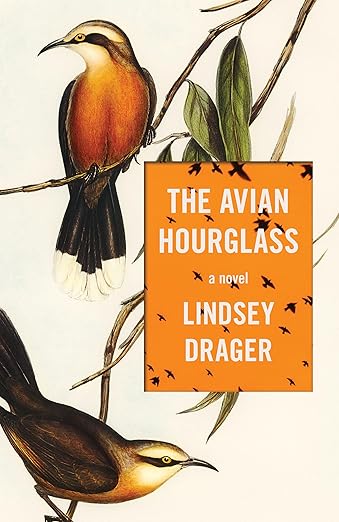
The Avian Hourglass Lindsey Drager

One of my favorite books ever. A world without birds. Tragic and yet the people Drager makes live here have spirit even without the most elemental animals.

The End of Tennessee Rachel Hanson

Good book about a woman leaving her fundamentalist household. She is wracked by guilt for leaving her siblings behind.

Entwined Bridget Lyons

Excellent book about specific animals and how they are responded to climate change.

Field Guide to the Subterranean Justin Hocking

Fascinating book about the darknesses of human actions and earth’s underground spaces.

College Girl Laura Gray-Rosendale (re-read and taught)

A rape rendered in distressing detail, Gray-Rosendale uses the writing of her own story to both heal and to understand how writing works.

Braiding Sweetgrass Robin Wall Kimmerer (re-read and taught)

Western academic ecology interwoven with Indigenous knowledge. Obvs very brilliant.

Blanket KT Thompson (re-read and taught)

Excellent book about blankets, what they cover, what they reveal, Native American History/Personal History

Bigger press books read by eye:

The Bluest Eye Toni Morrison (re-read)

This book is actually super weird. The POV moves around so much. Very strange/interesting to have one of the POV’s be by a man who rapes his daughter.

The Mighty Red Louise Erdrich

A cool river and farm and animals dying mysteriously. I liked this much better than The Sentence but not as much as The Night Watchman

Dust Alison Stine

Excellent book about a girl dragged to a very small, dusty town. She’s not allowed any freedom except at the café where she takes refuge.

The Bean Trees Barbara Kingsolver (re-read)

Turtle is kind of abducted! Didn’t quite realize it the first time. A little more complainy than I remember.

Salt Bones Jennifer Gavin

Mystery and the Salton Sea! What more could you want? Generational misunderstandings and missing women.

Mother Trucker Amy Butcher

Very interesting to read after having just returned from the Haul Road in Fairbanks

Heavy Kiese Laymon (re-read and taught)

This book is so embodied. Written in the second person, ostensibly to his mother, Laymon puts gravity in every detail.

I list these audiobooks basically in reverse chronological order. I was super annoyed by Flesh. Find further annoyances below.

Flesh David Szalay

If the author cut “okay” from the dialogue, this book would have saved a lot of paper. I’m glad the title was “Flesh” so I could understand that the protagonist, this very boring guy, was driven by bodily pursuits. Why even have him talk?

One Day, Everyone Will Have Been Against This Omar El Akkad

Great and hard and necessary. See substack.

The Light Eaters Zoë Schlanger

So fantastic. Plants aren’t human but they still show kinds of intelligence.

Circe Madeline Miller

Loved. Came late to this. Actually about Circe, but her side of the story. True witchery!

Last Night in Montreal Emily St. John

Kind of annoying book about wayward twenty-year olds. The Lolita allusions felt over-the-top.

What We Can Know Ian McEwen

Part 1 is about living in a flooded planet 2120 and trying to be a literature professor. Part 2 is about the wife of a poet who wrote her own memoirs. The parts do not shine light upon one another. Annoyed.

When We Cease to Understand the World Benjamin Labatut

Great book about uncertainty and principles and fictionalized stories about Heidegger and Schrödinger.

Into the Clear Blue Sky Rob Jackson

Focusing primarily on methane, Jackson uncovers ways we can prevent greenhouse gases from escaping into the atmosphere. Very good.

The Old Ways Robert MacFarlane

Dude walks around England. Could not finish.

Magical/Realism Vanessa Angélica Villareal

Incredibly smart and readable understanding of how pop music, gaming, and Game of Thrones play into our understanding of literature. Brilliant.

Fuzz Mary Roach

Excellent fun times thinking about how animals get into trouble, often because humans are in their way.

Prophet Song Paul Lynch

Darkest book ever but also spot on for the US if we don’t stop the fascism now. S

Bottoms Up and the Devil Laughs Kerry Howley (reread but I didn’t know it until halfway through)

Reality Winner’s disillusionment with the government leads to her to share one small piece of classified data. She gets punished in ways far beyond usual. Also, it’s The Intercept’s fault for not scrubbing identifying material.

Dream Count Chimamanda Ngoza Adichie

Very good. Four-POV’s about Nigeria and Washington DC, love, feminism, body autonomy.

The Frozen River Ariel Lawton

18th Century Mid-wife with very modern viewpoint. Writing is strained.

Raising Hare Chloe Dalton

Fave book of the year. See above.

The Time of Our Singing Richard Powers

Long book about 1940s singing. I didn’t finish even though I love Richard Powers. He should blurb my novel!

Tiny, Beautiful Things Cheryl Strayed

I hadn’t read this collection of dear Sugar columns. Sweet.

Orbital Samantha Harvey

Fine. I don’t remember much about it. Sometimes, I wonder about The Booker Prize

Boys and Oil Taylor Brorby

Excellent book about growing up in oil country and surviving.

Careless People

Awesome book about Facebook and how a senior exec came to find it reprehensible.

Weather Jenny Offill

Short book. Quite lovely though I don’t remember much.

Silent Spring Rachel Carson

I can’t believe I hadn’t read this. So beautifully written and so disturbing. The problem isn’t just DDT though. The pesticides we continue to use continue to kill everything around us.

Black Reconstruction in America WEB Dubois

Also can’t believe I haven’t read this. Clarifies how racism was instituted after the Civil War. People, especially poor, white people, were driven to be racist to hold onto any glimmer of power they had.

The Safekeep Yael Van Der Wouden

Omg. So boring. Almost died. Old timey people in cars. Annoyed.

Twist Colum McCann

Cables on the seafloor. Intrigue on the High Seas. Not my kind of book.

On Tyranny Timothy Snyder

Required reading for this year

Whale Fall Elizabeth O’Connor

Hmm. Ocean involved? The eating of a beached whale?

Cold Crematorium: Reporting from the Land of Auschwitz Józeph Debreczeni

Cold and hard story from the “sickhouse” at Auschwitz. Necessary.

The Color of Water: A Black Man’s Tribute to his White Mother James McBride

Lovely reflections about color. I don’t remember that much.

Tom Lake Ann Patchett

Cherry trees and daughters. Kind of just beautiful.

Playground Richard Powers

OMG. A story that is very maddening at the end. Good though.

A Thousand Splendid Suns Khaled Hosseini re-read.

Important book for 2025

Everything is Tuberculosis John Green

Title is self explanatory. I’m reading it again right now. I bought it for 3 people for Christmas. I’m teaching it for my climate science class.

Palaver Bryan Washington

Pretty good. Gay son deals with Jamaican mom who now lives in Houston while she visits him in Tokyo.

Underworld Don DeLillo

I started this book 20 years ago and then was like, I don’t want to read a book about a baseball. The book isn’t really about a baseball, except that the book really is about a baseball. I liked it but thought it was annoyingly hyper realistic.

The God of the Woods Liz Moore

OK. Camp counselors and lost children. Mostly a mystery/thriller, which I don’t generally prefer.

The Ministry of Time Kaliane Bradley

I LOVED this book about time travel. The protagonist is a handler for a man transplanted from 18 something to current times. Might read again soon.

The 1619 Project

A must read for 2025. Should have read sooner.

The Secret History Donna Tartt

This was my year for long books. I really liked the intricacies of these screwed-up kids who really screwed up.

Whisky Tender Deborah Taffa

Smart description of being torn between many cultures. Great, place-based insights into Latino and Indigenous communities.

The Antidote Karen Russell

Interestingish because there’s a witch and a dustbowl, but super shallow. I read that the book is meant to be as deep as YA, which seemed unfair to YA. With Swamplandia, I will never forget the bad man rowing through the swamps. Everytime I paddleboard, I think of him. I might remember one jump shot the main character takes. And some dust.

On Time and Water Andri Snaer Magnason

Glaciers and melting and sadness and hope.

The Fraud Zadie Smith

Libro.fm says I listened to this book but I do not remember a thing.

Barkskins Annie Proulx

Maybe one of my favorite books ever. I listened to this one too and remember everything. (I’ll try the Zadie Smith again). Pretty much the tale of the Eastern United States through the POV of mowing down trees (and people) for profit. So good and very long.

Nightbitch Rachel Yoder

Woman has a baby. The complete inside-outing of her body and the needs this new creature freak her out. Very right on.

The Horse Willy Vlautin

A man lives way out of town. He’s too old to be doing such things. He tries to save his horse. Very good. My friend Lynn knows him!

Creature Lake Rachel Kushner

Pretty OK book about a guy who lives in a cave and people have to think about him and his thoughts.

This Strange Eventful History Claire Messud

Following the lives of a marriage, children, Algiers, WWII. It was fine.

West with Giraffes Lynda Rutledge

Writing very cheeky and flamboyant but chasing giraffes is always fun.

The Quickening Elizabeth Rush

Pregnant woman. Climate change. On a boat on the way to Antarctica. Pretty good.

How Beautiful We Were Imbolo Mbue

Fighting against oil companies is always a good idea.

The Great Believers Rebecca Makkai

1980s. Art. Friends up to no good. A bit like A Little Life but way less melodrama

Middlemarch George Eliot

Why didn’t I read this 1000 years ago? Like DeLillo, she’s interested in details. Unlike DeLillo, she doesn’t want to batter us over the head with them (I liked the DeLillo! It was just a lot).

2666 Roberto Bolaño

Finally read this. Very long. Also, like DeLillo, many details although these details felt a little more salient. Many countries. Many people. Many dead women in St. Teresa/Juarez. Very good. Glad I survived.

Proofing Was Not (but Has Become) my Forte

I finished proofs for How to Plant a Billion Trees on Monday morning. I also had proofs due for a companion essay that will come out from Ecotone soon. I went back and forth to ensure that the changes in the one manuscript were the same in the other. I think I got whiplash.

I tried to explain to my grad students last week why proofreading is so hard. “It’s the last chance to see what kind of nonsense you wrote before the rest of the world sees it!” Proofreading is really meant to only capture misplaced commas and words, but I, dear reader, found whole sentences that required reworking. It’s a hard thing to do—write a two-pronged book—one prong about childhood molestation and abortion and the other about forest fires and their capacity for persistence. There is meant to be a metaphor, but if you overplay it, the comparisons sound trite and if you underplay it, the point of pairing the two stories is confounding. I don’t want to confound. I don’t mind complicating thing, but I hope that I also clarify ideas too?

My student asked, “How can you even find typos? Doesn’t your brain just read over them?” “Yes!” I told him. “That’s why there are typos in the first 14 versions I’ve revised.” But at the proofing stage, somewhat like the proofing stage during bread week on the Great British Bake Off, it’s all or nothing at this point. Readers, (hence the dear readers address above) could pull your book apart like Paul pulls apart poorly risen bread. The crust could split. The dough could be dense. Where are the air pockets?!?!

If I put on these “public eyes” reading glasses, then all the flaws out themselves. It feels very precarious—like hiking down a sandy, slippery Grand Canyon in shoes with no tread—what if I miss something? What if this doesn’t read like I think it reads? What if the whole project makes no sense and I wind up in the middle of the Colorado River with neither boat nor paddle?

For people less self-conscious than I, they with more self-confidence, maybe this process doesn’t feel as discombobulating. I feel like I’ve been a box with a bunch of rocks and shook about by potential audience, doubt, and also hope. Bruising! That’s what it is! As bruising as all these metaphors.

I’ll stop talking about this book for a bit and turn my overly metaphorical eye to larger concerns, but let me tell you, after I finished proofing, I took a nap for an hour. Then 6 hours later, I went to bed and slept until 8:45 a.m. That is super late for me. No surprise, I suppose, after all this baking and downhill slide-hiking.

The Hard Stuff. And the privilege to write it.

I live a pretty privileged existence. Today, for example, I woke up at 7. Drove my son to school, ran my dogs, came home to host a couple of Zoom meetings, made lunch from leftovers I’d cooked the night before, emailed my friends at other universities about to recruit undergraduate student to our Masters of Fine Arts program here at NAU, finished proofing my book, Writing the Hard Stuff: Turning Difficult Subjects into Meaningful Prose, then sat down to write this column. Who has time to write in the middle of the day, you might ask. Writing is, actually, part of my job. Writing is hard. It should be easy but you have to think about premises, themes, sentences, arguments, audience, images, word choice—it’s like juggling 16 balls in your brain. After I finish writing, I will prep for class and send 14 more emails. And then, I will grade and give feedback to manuscripts. After that, I will teach a class where my graduate students and I will discuss premises, themes, sentences, arguments, audience, images, word choice of their essays for three hours. My job is hard and fun and I am very, very lucky to be able to do this work.

The Washington Post, which has become increasingly conservative since Jeff Bezos became the owner, published an article with the title The Sweetheart Deal for Academia is Over. Since I canceled the WP right a year ago, I couldn’t access the piece, but I could imagine what it said. Something like, universities are socialist systems that support research no one cares about and that teachers don’t teach enough and they’re separate from the communities in which they are ensconced. Not that these people didn’t go to college. It’s an “education for me, not for thee” kind of reporting.

Legacy media has targeted universities so long and so unvaryingly that real trust in higher education has slipped. At a presentation by the Dean of College and Letters, Dr. Julie Piering reiterated that slip saying that in recent polling nearly two-thirds of Americans don’t believe that the cost of higher education is worth it.

Grim news.

But, she said, if you flip the question and ask, do you think a college education benefits society, the numbers flip as well. Two-thirds of people do believe that a college education betters our communities.

            Sometimes, universities don’t communicate what they do very well. Mainly, because universities try to speak as one monolith. Universities do so many different things toward different goals, it feels nearly impossible to account for them all. Recent funding cuts have revealed some stark realities: funding for Alzheimer’s, Parkinson’s, and child cancers was slashed in the early part of the year. Many of the medicines we rely on come from university research. Even if people are unaware of how much influence colleges have on health care, once you make a list, it’s pretty easy to say, OK. STEM folks. You make sense. Science, Technology, and Engineering? We do like computers that go fast and buildings that stay standing. Math? Well, you wouldn’t want people to just go to school for STE programs.

            Sometimes, people use the acronym STEAM to include the arts, which I appreciate. But we in the rest of the college need more letters than that. Education. Philosophy. Psychology. English. History. Perhaps we could use the heading Humanities, Art, and Social Sciences but even that feels too wide. Psychology may be more obvious as to its use, whereas dance may less clear, but the arts and humanities inform nearly every element of our lives—from movies and TV shows we watch, video games we play, concerts we attend, NFL halftime shows (dancing AND singing). If we find the technology behind computers useful, what we use the computers to do—watch art (film, shows,), study texts (all I do all day is read manuscripts), and try to make Facebook and Instagram posts that people see (It takes a special combination of artistry, marketing, and rhetorical skills to get your one line of prose to be liked, or even loved), write, make reels, make films, make posters and flyers for people to attend all the cultural events that the College of Arts and Letters produces each month from plays, poetry readings, visiting lectures, piano recitals, dance performances—the stuff that enriches our lives is the stuff we use STEM for—we need to use the STEM to get to what we want to see and create and produce. And, if you need numbers to correlate to meaning, according to Arizona’s Commission on the Arts, in 2023, arts and culture contributed $15.8 billion to the economy. Art is work. And economically fecund work at that.

If universities are getting more expensive, it’s because, in Arizona at least, the state only provides 12% of its funding. The rest is either raised through foundation campaigns or paid for by tuition. If we went back to funding universities as we did in the last century, tuition would be so inexpensive, it would be silly not to attend. I still think it’s smart to go to college—another number?  A person with a bachelor’s degree can earn significantly more than someone with only a high school diploma, with some estimates suggesting a 61% to 86% higher annual income, or a lifetime earnings premium of over $1.5 million. Plus, we teach students how to adapt. Their critical thinking skills helps them pivot to a different career. Some folks with STEM degrees might have to start over.

            I don’t want academia’s “sweet deal” to end. I want the opposite. I want everyone to have a sweet deal. I want everyone’s work to be meaningful to them. I want everyone to have a flexible schedule and sometimes work from home. I want everyone to do their “art,” and be supported for it. I want everyone to be able to do work that is both fun and hard. Instead of making sure everyone is miserable, maybe we could find a way to privilege everyone.

When Fascism Stumbles and Falls

People say we’re not doing enough enmadden me. “We,” my fellow engaged Americans, are standing on street corners, calling their congresspeople, filing lawsuits, boycotting businesses, talking and waiting for people who have gone Maga to come back, making jokes, making art, writing songs, sending postcards, getting out the vote, sending money. It’s nearly a full time job working against the regime and it’s insulting to say that we’re not doing enough. Of course, if you me “we,” the unengaged Americans, well that’s true, but they’re not getting your admonitions either.

Writing things on bullets—unverifiable nonsense coming from the FBI, and nothing come from other  from job numbers, from climate

Fasicsm so fast that they’ll trip and we’ll gather up the failed system and push not for a return to normal but a reach toward better. Big social changes with a new democratic party, lowercase letters, that might even change its name to democratic socialist (although that’s probably too charged) or Worker’s Party (which is too Marxily charged), but maybe like the Everyone Party. Everyone including the animals, rivers and trees! Or The Party of Everyone Except Billionaires. PEEB for Short!

How could this happen? I have heard great stories of people turning against the fascism one by one. Often, it’s by having someone not ideologically bound, but open-minded, to listen to someone who has questions about the direction the country is going. The wall of die-hard MAGA people can be splintered by one right-directed postcard, saying, or question. The more splinters, the weaker the wall.

Big ideas like general strikes and massive protests are hard to organize. Not so much because we don’t have the will but because we are such a huge country—it’s one of the things that will save us. We don’t have to be ideologically pure. We can just keep our many, varied mouths moving and our many, varied ears listening. Chimamanda Ngozi Adichie, in her author’s note at the end of her new book Dream Count wrote, “Ideology blocks different ways of seeing and art requires many eyes.”

There is a reason teachers, artists, writers, journalists are silenced. It’s not only because we talk and put our work and words into the world—it’s because we also listen to the people and the world. As we listen and make and do, we lift someone up, change someone’s mind, save someone’s life, one by one. I don’t know if paying attention to the tiny details counts as a philosophy. William Blake’s there is a world in every grain of sand though resonates. One postcard, one FB post, one conversation at the grocery store, one meal, one instance of pointing to another person as a hawk lifts off from a tree branch whether you’re in Central Park or Mobile, Alabama.

On one of my attempts to get people to send postcards of facts to random people in red states, I noted that it would just take 100,000 of us to send 1,000 post cards to reach the 100,000,000 or so who voted for Trump. When my book, How to Plant a Billion Trees was on submission, Harper Collins wanted to publish it, but marketing came back and said “we really need her to have 100,000 followers.” (Not that everyone needs 100,000—just that this book and I would need a big following). But my point is, 100,000 people could be inspired to send 1,000 postcards. We don’t need all hundred million people to change their minds, but if we can note that health care, food, housing, clean air and water, renewable energy, no genocide, Universal Basic Income, natural resource preservation to enough people, a small percentage will join PEEB! (exclamation point required). We have to be ready when the fascism falls to pick everyone up and in so lifting them, we will become the country we deserve to be.

Edited to note: In my latest blog post, I wrote about the new party, The Party of Everyone Except Billionaires.” When I told Andrea Askowitz about it, she said, “PEEB? PEEB sounds ridiculous.” But hearing the word upon her lips, I recognized the incipient future. PLEEB! As in we Plebeians versus the Billionaires. Now I just have to make the L stand for something. I thought of Love but you all already think I’m a cheesemeister. So far, we’ve crowd sourced Party of Liberty for Everyone Except Billionaires.”

What even is politics.

Is there anything that has no politics? Maybe politics isn’t the right word, because polis has its roots in the name of Aristotle’s classic work, Politiká, which introduced the Ancient Greek term politiká (Πολιτικά, ‘affairs of the cities’). Polis denotes city/town. Politics implies policy and police, the connotation means social system and social system might mean consequence or even simply effect, but originally, polis had a local sense—that which I can affect as a citizen.

Journalism, even very early writings written by travelers, including Herodotus and Thucydides, stretched the meaning of politics from its local association to global consideration, but those who could effect change still operated on a local basis. The feudal system avoided politics by installing kings by divine right. Politics, as Hilary Mantel made clear in Wolf Hall, happened behind the scenes. But in our current times, due to social media, politics means everything. Last night, I watched a film about surfing. How lovely to take a break from The Pitt—a medical drama whose political context is, when our community foregoes mental health care, physical health care, educational ambition, neighborhood and family support, it all ends up in the ER. Or, when watching Somebody Somewhere where people outcast from society find their own company, but still struggle. Or when looking on Facebook and seeing just a speck of a book and wonder if friend’s book will be prized or ignored based on who uplifts it, who lends their name and prestige to it. I’m sitting with my cats and wondering how often they kill birds and know I can’t tell Facebook that! Or, thinking about how environmentally unsound it is to have dogs—what animals died to manufacture, industrially, on a global scale, pet food?

But this surfing show, 100 Foot Wave, seemed so politically free. For the first five minutes. How self-sufficient a sport. Paddle to a wave. Step up on a board (made of plastic, not entirely free of harm) and ride a wave. But then the waves became too crowded. Now we need a boat with a two-stroke engine to drive us out to the less-populated bigger waves. Now tourists flock, even in the winter, to Nazaré, Portugal the town where hundred-foot waves are promised. Now the two-stroke engines slip carbon dioxide into the atmosphere and gasoline/oil mixtures into the ocean.

At a faculty meeting, we discussed how we writing professors use AI. Some faculty ask their students to ask ChatGPT to generate an essay, then ask students to write their own and compare them. The students prefer the homegrown essays. At least for now. During the meeting, a post popped up on my screen (which, if I were my colleagues, I’d be annoyed—who has their screens open at meetings?) that more energy will be used than all the homes in Wisconsin to power a data center for AI. One of my colleagues compared AI to a car. She said you like that it’s there but you don’t want to use it all the time. You need to exercise your brain just as you do your body. That’s why we have treadmills. I thought, or, we could have built a non-automobile world where you had to, say, walk to work, thereby requiring neither mechanized transport or exercise.

Online, it never ends. Israel is storming into Gaza after bombing, then starving the people. How much more death. Off the coast of Venezuela, our government killed people on boats with no evidence of their drug trafficking and even if there were evidence, no right to torpedo people out of the water without a declared war (and even then?). Also off the coast of Venezuela, the ocean current that usually comes this time of year to stir up nutrients to feed the fish which feed the Venezuelans didn’t arrive. Also, inside Venezuela, a glacier that provides water for a huge number of the population, has shrunk to near uselessness. Also, it’s hunting season for wolves in Wyoming. Also, my university just got its budget cut again. Also, Trump canceled another wind farm. Also, the Supreme Court is young and ugly and may overturn a 2007 ruling that regulates greenhouse gas emissions. If glaciers, boats, and wolves are political, what isn’t? How many times a day can I be made mad.

I’m not the only mad one mad. It’s not only me who finds everything political. Cancel culture is politics. Someone’s mad at me for feeling sorry for the kid who shot Charlie Kirk. Rebecca Solnit is mad that people are calling resistance against the admin a lost cause (I am also mad at they who are giving up the fight). Democrats are mad at the Dems. The Republicans are mad at the libs who they have fully owned but still blame for political violence that is perpetuated mainly by them. The politicians are mad at the politicians. Adam Schiff is mad a Kash Patel. Kash Patel is mad at the meme-maker who voiced and animated a baby who looked and spoke just like him.

Trump was mad a Stephen Colbert so he had him fired for his politics. Trump, or the FCC, was mad a Jimmy Kimmel, so they fired him for his speech which they called political. I’m mad that so much power rests in one politician’s hands that he can quell speech. I understand that yes, in a capitalist economy, there are consequences for what one says, which isn’t the same as denying free speech. But if you and your buddies are buying all the media outlets AND firing people for speaking their own thoughts, that is tantamount to suppressing free speech.

I do feel for Tyler Robinson who shot Charlie Kirk. I feel badly for Charlie Kirk even though I thought he was a bully. I feel bad about Melissa Hortman, state legislator, her husband and her dog who were shot in Minnesota. I feel bad for the professor at Ball State for saying that she was sorry Kirk was killed but that he himself did sow violence. I feel bad for political violence. I feel for all the kids who are made constantly mad. I feel for the kids who are mad but say they’re not political. Politics is everything and everything is maddening? Who can tell the difference between politics and anger?

The question is, what to do with this madness? I was talking with a friend last week as we listed all the horrors. She asked how come I didn’t sound upset. I told her I was upset but that I spend so much time being upset, I have my anger pretty measured by now. As you can see from above, I spend a lot of time thinking how little actions like driving two-stroke jet skis contribute to global warming—as if one individual action can have planetary consequences. Climate Change, like social media, makes us think broadly and also angrily. The only solution I can find is, ironically, in the opposing premise above: I do think one action can have planetary consequences. Or, rather, I do think local action can make a difference. Or, if nothing else, is the antidote to anger. Every action I’ve taken (as opposed to internet scrolling or news reading) has lessened the anger. From delivery food at the Food Center to marching at the protests, from writing fact-filled postcards about the Big Beautiful Bill to collecting clothes for people in Ukraine, when I’m doing something locally, even if it’s for global causes, I’m less mad. And truly, none of these things is really political. Most of us, on the ground, are just working to make as many things better as we can. Even those who really just want to ride 100-foot waves. I’m sure if I were in Nazaré, Portugal and met the people who worked in the city, I would probably even learn to like the boats. (Also. I canceled Disney and Hulu because they fired Jimmy Kimmel. Anger has its place!)

The Guns The Guns The Guns

After Trump’s election in November, 2024, I started a group called Coalescing 2025 as a response to Project 2025. I emailed all the women, transfriends, and non-binary folks in my contact list and invited them to Zoom with me to express their worries, frustrations, and concerns and to share ideas on how to resist the coming authoritarianism. One made stickers that read FelOn with the O as a swastika. Another made a poster of Elon Musk looking like a scrotum. Another protested in her neighborhood—they gave me a recent update that that group of 10 has grown to 100 where they protest every week. One compiled all the readings about how to resist fascism into a Google folder. At first, I suggested we all send books to random people in low-information counties random books. But that was kind of expensive. We began to send postcards instead that just listed facts. Facts are neither red nor blue. They just are. For this week, I’m going to send this simple fact. “As of September 16, 2025, the Gun Violence Archive (GVA) reports 10,560 gun-related homicides and unintentional deaths in the U.S. this year.” My hope is that these postcards will not alert everyone to the truth of what’s happening in this country, but they may pierce through the misinformation, false information, wished-were-true information, that we all fall victim to in our over-algorithmed social media.

Tyler Robinson’s roommate has shared a text thread that may prove Robinson did plan and mean to kill Charlie Kirk. While our countries polarization increases, it’s hard to get a sense of what the facts were. Utah’s Governor Cox said Robinson was a liberal. My newsfeed said he was a Groyper, a follower of Nick Fuentes, and that he shot Kirk because he wasn’t right wing enough. In the text thread, it sounds like Robinson was alarmed at the violence Charlie Kirk spread—which is neither a right or left attribute—just a face. What rings truer to me is that through online messaging, backdooring through games, titillating with memes, and providing a sounding board for general complaints, many young men don’t have a political ideology so much as a lot of concerns, problems, and frustrations.

Thanks for reading Nikwalk’s Substack! Subscribe for free to receive new posts and support my work.

It is crushing that so many of these concerns, problems, and frustrations fester in the young men and become amplified by zealous groups. Tyler Robinson has been charged with murder and obstruction of justice. The DA is seeking the death penalty. This is also crushing. He is, if we now judge adulthood as the time the prefrontal cortex is fully developed at age 25, just a 22 year old kid.

Charlie Kirk said terrible things, but that didn’t justify his murder. Kirk said terrible things about women, Islam, and Black people. But that didn’t justify his murder. Kirk said terrible and stupid things about gun violence, but that didn’t justify his murder.

The Guardian Reported Kirk’s hateful statements.

On race

If I see a Black pilot, I’m going to be like, boy, I hope he’s qualified.

– The Charlie Kirk Show, 23 January 2024

If you’re a WNBA, pot-smoking, Black lesbian, do you get treated better than a United States marine?

– The Charlie Kirk Show, 8 December 2022

Happening all the time in urban America, prowling Blacks go around for fun to go target white people, that’s a fact. It’s happening more and more.

– The Charlie Kirk Show, 19 May 2023

If I’m dealing with somebody in customer service who’s a moronic Black woman, I wonder is she there because of her excellence, or is she there because of affirmative action?

– The Charlie Kirk Show, 3 January 2024

If we would have said that Joy Reid and Michelle Obama and Sheila Jackson Lee and Ketanji Brown Jackson were affirmative action picks, we would have been called racists. Now they’re coming out and they’re saying it for us … You do not have the brain processing power to otherwise be taken really seriously. You had to go steal a white person’s slot to go be taken somewhat seriously.

– The Charlie Kirk Show, 13 July 2023

On debate

We record all of it so that we put [it] on the internet so people can see these ideas collide. When people stop talking, that’s when you get violence. That’s when civil war happens, because you start to think the other side is so evil, and they lose their humanity.

– Kirk discussing his work in an undated clip that circulated on X after his killing.

Prove me wrong.

– Kirk’s challenge to students to publicly debate him during the tour of colleges he was on when he was assassinated.

On gender, feminism and reproductive rights

Reject feminism. Submit to your husband, Taylor. You’re not in charge.

– Discussing news of Taylor Swift and Travis Kelce’s engagement on The Charlie Kirk Show, 26 August 2025

The answer is yes, the baby would be delivered.

– Responding to a question about whether he would support his 10-year-old daughter aborting a pregnancy conceived because of rape on the debate show Surrounded, published on 8 September 2024

We need to have a Nuremberg-style trial for every gender-affirming clinic doctor. We need it immediately.

– The Charlie Kirk Show, 1 April 2024

Charlie Kirk in his own words: ‘A Nuremberg-style trial for every gender-affirming clinic’ – video

On gun violence

I think it’s worth it to have a cost of, unfortunately, some gun deaths every single year so that we can have the second amendment to protect our other God-given rights. That is a prudent deal. It is rational.

– Event organized by TPUSA Faith, the religious arm of Kirk’s conservative group Turning Point USA, on 5 April 2023

On immigration

America was at its peak when we halted immigration for 40 years and we dropped our foreign-born percentage to its lowest level ever. We should be unafraid to do that.

– The Charlie Kirk Show, 22 August 2025

The American Democrat party hates this country. They wanna see it collapse. They love it when America becomes less white.

– The Charlie Kirk Show, 20 March 2024

The great replacement strategy, which is well under way every single day in our southern border, is a strategy to replace white rural America with something different.

– The Charlie Kirk Show, 1 March 2024

On Islam

America has freedom of religion, of course, but we should be frank: large dedicated Islamic areas are a threat to America.

– The Charlie Kirk Show, 30 April 2025

We’ve been warning about the rise of Islam on the show, to great amount of backlash. We don’t care, that’s what we do here. And we said that Islam is not compatible with western civilization.

– The Charlie Kirk Show, 24 June 2025

Islam is the sword the left is using to slit the throat of America.

– Charlie Kirk social media post, 8 September 2025

On religion

There is no separation of church and state. It’s a fabrication, it’s a fiction, it’s not in the constitution. It’s made up by secular humanists.

– The Charlie Kirk Show, 6 July 2022

Dani Anguiano contributed reporting.

but even all of these put together did not mean he deserved to get shot. But Tyler Robinson didn’t deserve to be the shooter either. A young, frustrated, angry, confused kid should not have access to the rifle that shot Charlie Kirk. If Tyler Robinson had a slingshot, Kirk would still be alive. Kids probably shouldn’t even have slingshots but to allow these young, confused, white, frustrated males to have access to semi-automatic weapons shouldn’t be a polarizing issue. Tyler Robinson’s family loved guns. He borrowed his grandpa’s gun for the shooting. He posed with his mother in social media with guns.

As of September 16, 2025, the Gun Violence Archive (GVA) reports 10,560 gun-related homicides and unintentional deaths in the U.S. this year. The organization also reports 304 mass shootings within the same time frame, but 304 mass shootings includes every kind of shooting where two or more people were killed—not the kind of scene we think of mass shootings where a gun man (or two) besiege a building (or a stadium) filled with unsuspecting people (often students).

Mother Jones has compiled a list of those kind of mass shootings.

· Austin parking lot shooting

· Montana bar shooting

· NYC Park Avenue shooting

· Reno casino shooting

· Apalachee High School shooting

· Arkansas grocery store shooting

· UNLV shooting

· Maine bowling alley and bar shootings

· Jacksonville Dollar General store shooting

· Orange County biker bar shooting

· Philidelphia neighborhood shooting

· New Mexico neighborhood shooting

· Texas outlet mall shooting

· Louisville bank shooting

· Nashville Christian school shooting

· Michigan State University shooting

· Half Moon Bay spree shooting

· LA dance studio mass shooting

· Virginia Walmart shooting

· LGBTQ club shooting

· University of Virginia shooting

· Raleigh spree shooting

· Greenwood Park Mall shooting

· Highland Park July 4 parade shooting

· Church potluck dinner shooting

· Concrete company shooting

· Tulsa medical center shooting

· Robb Elementary School massacre

· Buffalo supermarket massacre

· Sacramento County church shooting

· Oxford High School shooting

· San Jose VTA shooting

· FedEx warehouse shooting

· Orange office complex shooting

· Boulder supermarket shooting

· Atlanta massage parlor shootings

· Springfield convenience store shooting

· Molson Coors shooting

· Jersey City kosher market shooting

· Pensacola Naval base shooting

· Odessa-Midland shooting spree

· Dayton entertainment district shooting

· El Paso Walmart mass shooting

· Gilroy garlic festival shooting

· Virginia Beach municipal building shooting

· Harry Pratt Co. warehouse shooting

· Pennsylvania hotel bar shooting

· SunTrust bank shooting

· Mercy Hospital shooting

· Thousand Oaks nightclub shooting

· Tree of Life synagogue shooting

· Rite Aid warehouse shooting

· T&T Trucking shooting

· Fifth Third Center shooting

· Capital Gazette shooting

· Santa Fe High School shooting

· Waffle House shooting

· Yountville veterans home shooting

· Marjory Stoneman Douglas High School shooting

· Pennsylvania carwash shooting

· Rancho Tehama shooting spree

· Texas First Baptist Church massacre

· Walmart shooting in suburban Denver

· Edgewood businees park shooting

· Las Vegas Strip massacre

· San Francisco UPS shooting

· Pennsylvania supermarket shooting

· Florida awning manufacturer shooting

· Rural Ohio nursing home shooting

· Fresno downtown shooting

· Fort Lauderdale airport shooting

· Cascade Mall shooting

· Baton Rouge police shooting

· Dallas police shooting

· Orlando nightclub massacre

· Excel Industries mass shooting

· Kalamazoo shooting spree

· San Bernardino mass shooting

· Planned Parenthood clinic

· Colorado Springs shooting rampage

· Umpqua Community College shooting

· Chattanooga military recruitment center

· Charleston Church Shooting

· Trestle Trail bridge shooting

· Marysville-Pilchuck High School shooting

· Isla Vista mass murder

· Fort Hood shooting 2

· Alturas tribal shooting

· Washington Navy Yard shooting

· Hialeah apartment shooting

· Santa Monica rampage

· Pinewood Village Apartment shooting

· Mohawk Valley shootings

· Sandy Hook Elementary massacre

· Accent Signage Systems shooting

· Sikh temple shooting

· Aurora theater shooting

· Seattle cafe shooting

· Oikos University killings

· Su Jung Health Sauna shooting

· Seal Beach shooting

· IHOP shooting

· Tucson shooting

· Hartford Beer Distributor shooting

· Coffee shop police killings

· Fort Hood massacre

· Binghamton shootings

· Carthage nursing home shooting

· Atlantis Plastics shooting

· Northern Illinois University shooting

· Kirkwood City Council shooting

· Westroads Mall shooting

· Crandon shooting

· Virginia Tech massacre

· Trolley Square shooting

· Amish school shooting

· Capitol Hill massacre

· Goleta postal shootings

· Red Lake massacre

· Living Church of God shooting

· Damageplan show shooting

· Lockheed Martin shooting

· Navistar shooting

· Wakefield massacre

· Hotel shooting

· Xerox killings

· Wedgwood Baptist Church shooting

· Atlanta day trading spree killings

· Columbine High School massacre

· Thurston High School shooting

· Westside Middle School killings

· Connecticut Lottery shooting

· Caltrans maintenance yard shooting

· R.E. Phelon Company shooting

· Fort Lauderdale revenge shooting

· Walter Rossler Company massacre

· Air Force base shooting

· Chuck E. Cheese’s killings

· Long Island Rail Road massacre

· Luigi’s shooting

· 101 California Street shootings

· Watkins Glen killings

· Lindhurst High School shooting

· Royal Oak postal shootings

· University of Iowa shooting

· Luby’s massacre

· GMAC massacre

· Standard Gravure shooting

· Stockton schoolyard shooting

· ESL shooting

· Shopping centers spree killings

· United States Postal Service shooting

· San Ysidro McDonald’s massacre

· Dallas nightclub shooting

· Welding shop shooting

156 mass shootings since 1982. Most of these were inflicted by a semi-automatic rifle. Since the US Government prohibits the Center for Disease Control from collecting data, it’s hard to know how many people die per year from semi-automatic rifles. In 2023, it’s estimated at 47,000 people died of gun injuries.