The Hard Stuff. And the privilege to write it.

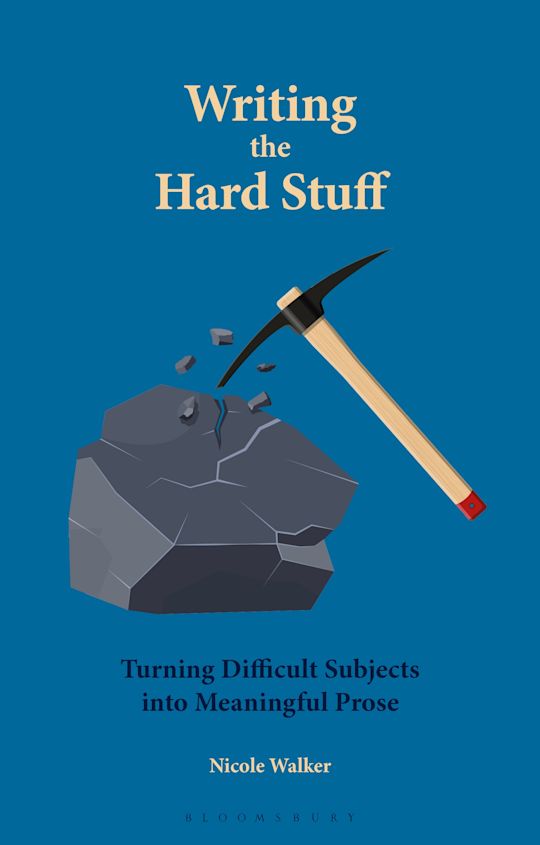
I live a pretty privileged existence. Today, for example, I woke up at 7. Drove my son to school, ran my dogs, came home to host a couple of Zoom meetings, made lunch from leftovers I’d cooked the night before, emailed my friends at other universities about to recruit undergraduate student to our Masters of Fine Arts program here at NAU, finished proofing my book, Writing the Hard Stuff: Turning Difficult Subjects into Meaningful Prose, then sat down to write this column. Who has time to write in the middle of the day, you might ask. Writing is, actually, part of my job. Writing is hard. It should be easy but you have to think about premises, themes, sentences, arguments, audience, images, word choice—it’s like juggling 16 balls in your brain. After I finish writing, I will prep for class and send 14 more emails. And then, I will grade and give feedback to manuscripts. After that, I will teach a class where my graduate students and I will discuss premises, themes, sentences, arguments, audience, images, word choice of their essays for three hours. My job is hard and fun and I am very, very lucky to be able to do this work.

The Washington Post, which has become increasingly conservative since Jeff Bezos became the owner, published an article with the title The Sweetheart Deal for Academia is Over. Since I canceled the WP right a year ago, I couldn’t access the piece, but I could imagine what it said. Something like, universities are socialist systems that support research no one cares about and that teachers don’t teach enough and they’re separate from the communities in which they are ensconced. Not that these people didn’t go to college. It’s an “education for me, not for thee” kind of reporting.

Legacy media has targeted universities so long and so unvaryingly that real trust in higher education has slipped. At a presentation by the Dean of College and Letters, Dr. Julie Piering reiterated that slip saying that in recent polling nearly two-thirds of Americans don’t believe that the cost of higher education is worth it.

Grim news.

But, she said, if you flip the question and ask, do you think a college education benefits society, the numbers flip as well. Two-thirds of people do believe that a college education betters our communities.

            Sometimes, universities don’t communicate what they do very well. Mainly, because universities try to speak as one monolith. Universities do so many different things toward different goals, it feels nearly impossible to account for them all. Recent funding cuts have revealed some stark realities: funding for Alzheimer’s, Parkinson’s, and child cancers was slashed in the early part of the year. Many of the medicines we rely on come from university research. Even if people are unaware of how much influence colleges have on health care, once you make a list, it’s pretty easy to say, OK. STEM folks. You make sense. Science, Technology, and Engineering? We do like computers that go fast and buildings that stay standing. Math? Well, you wouldn’t want people to just go to school for STE programs.

            Sometimes, people use the acronym STEAM to include the arts, which I appreciate. But we in the rest of the college need more letters than that. Education. Philosophy. Psychology. English. History. Perhaps we could use the heading Humanities, Art, and Social Sciences but even that feels too wide. Psychology may be more obvious as to its use, whereas dance may less clear, but the arts and humanities inform nearly every element of our lives—from movies and TV shows we watch, video games we play, concerts we attend, NFL halftime shows (dancing AND singing). If we find the technology behind computers useful, what we use the computers to do—watch art (film, shows,), study texts (all I do all day is read manuscripts), and try to make Facebook and Instagram posts that people see (It takes a special combination of artistry, marketing, and rhetorical skills to get your one line of prose to be liked, or even loved), write, make reels, make films, make posters and flyers for people to attend all the cultural events that the College of Arts and Letters produces each month from plays, poetry readings, visiting lectures, piano recitals, dance performances—the stuff that enriches our lives is the stuff we use STEM for—we need to use the STEM to get to what we want to see and create and produce. And, if you need numbers to correlate to meaning, according to Arizona’s Commission on the Arts, in 2023, arts and culture contributed $15.8 billion to the economy. Art is work. And economically fecund work at that.

If universities are getting more expensive, it’s because, in Arizona at least, the state only provides 12% of its funding. The rest is either raised through foundation campaigns or paid for by tuition. If we went back to funding universities as we did in the last century, tuition would be so inexpensive, it would be silly not to attend. I still think it’s smart to go to college—another number?  A person with a bachelor’s degree can earn significantly more than someone with only a high school diploma, with some estimates suggesting a 61% to 86% higher annual income, or a lifetime earnings premium of over $1.5 million. Plus, we teach students how to adapt. Their critical thinking skills helps them pivot to a different career. Some folks with STEM degrees might have to start over.

            I don’t want academia’s “sweet deal” to end. I want the opposite. I want everyone to have a sweet deal. I want everyone’s work to be meaningful to them. I want everyone to have a flexible schedule and sometimes work from home. I want everyone to do their “art,” and be supported for it. I want everyone to be able to do work that is both fun and hard. Instead of making sure everyone is miserable, maybe we could find a way to privilege everyone.
What even is politics.

Is there anything that has no politics? Maybe politics isn’t the right word, because polis has its roots in the name of Aristotle’s classic work, Politiká, which introduced the Ancient Greek term politiká (Πολιτικά, ‘affairs of the cities’). Polis denotes city/town. Politics implies policy and police, the connotation means social system and social system might mean consequence or even simply effect, but originally, polis had a local sense—that which I can affect as a citizen.

Journalism, even very early writings written by travelers, including Herodotus and Thucydides, stretched the meaning of politics from its local association to global consideration, but those who could effect change still operated on a local basis. The feudal system avoided politics by installing kings by divine right. Politics, as Hilary Mantel made clear in Wolf Hall, happened behind the scenes. But in our current times, due to social media, politics means everything. Last night, I watched a film about surfing. How lovely to take a break from The Pitt—a medical drama whose political context is, when our community foregoes mental health care, physical health care, educational ambition, neighborhood and family support, it all ends up in the ER. Or, when watching Somebody Somewhere where people outcast from society find their own company, but still struggle. Or when looking on Facebook and seeing just a speck of a book and wonder if friend’s book will be prized or ignored based on who uplifts it, who lends their name and prestige to it. I’m sitting with my cats and wondering how often they kill birds and know I can’t tell Facebook that! Or, thinking about how environmentally unsound it is to have dogs—what animals died to manufacture, industrially, on a global scale, pet food?

But this surfing show, 100 Foot Wave, seemed so politically free. For the first five minutes. How self-sufficient a sport. Paddle to a wave. Step up on a board (made of plastic, not entirely free of harm) and ride a wave. But then the waves became too crowded. Now we need a boat with a two-stroke engine to drive us out to the less-populated bigger waves. Now tourists flock, even in the winter, to Nazaré, Portugal the town where hundred-foot waves are promised. Now the two-stroke engines slip carbon dioxide into the atmosphere and gasoline/oil mixtures into the ocean.

At a faculty meeting, we discussed how we writing professors use AI. Some faculty ask their students to ask ChatGPT to generate an essay, then ask students to write their own and compare them. The students prefer the homegrown essays. At least for now. During the meeting, a post popped up on my screen (which, if I were my colleagues, I’d be annoyed—who has their screens open at meetings?) that more energy will be used than all the homes in Wisconsin to power a data center for AI. One of my colleagues compared AI to a car. She said you like that it’s there but you don’t want to use it all the time. You need to exercise your brain just as you do your body. That’s why we have treadmills. I thought, or, we could have built a non-automobile world where you had to, say, walk to work, thereby requiring neither mechanized transport or exercise.

Online, it never ends. Israel is storming into Gaza after bombing, then starving the people. How much more death. Off the coast of Venezuela, our government killed people on boats with no evidence of their drug trafficking and even if there were evidence, no right to torpedo people out of the water without a declared war (and even then?). Also off the coast of Venezuela, the ocean current that usually comes this time of year to stir up nutrients to feed the fish which feed the Venezuelans didn’t arrive. Also, inside Venezuela, a glacier that provides water for a huge number of the population, has shrunk to near uselessness. Also, it’s hunting season for wolves in Wyoming. Also, my university just got its budget cut again. Also, Trump canceled another wind farm. Also, the Supreme Court is young and ugly and may overturn a 2007 ruling that regulates greenhouse gas emissions. If glaciers, boats, and wolves are political, what isn’t? How many times a day can I be made mad.

I’m not the only mad one mad. It’s not only me who finds everything political. Cancel culture is politics. Someone’s mad at me for feeling sorry for the kid who shot Charlie Kirk. Rebecca Solnit is mad that people are calling resistance against the admin a lost cause (I am also mad at they who are giving up the fight). Democrats are mad at the Dems. The Republicans are mad at the libs who they have fully owned but still blame for political violence that is perpetuated mainly by them. The politicians are mad at the politicians. Adam Schiff is mad a Kash Patel. Kash Patel is mad at the meme-maker who voiced and animated a baby who looked and spoke just like him.

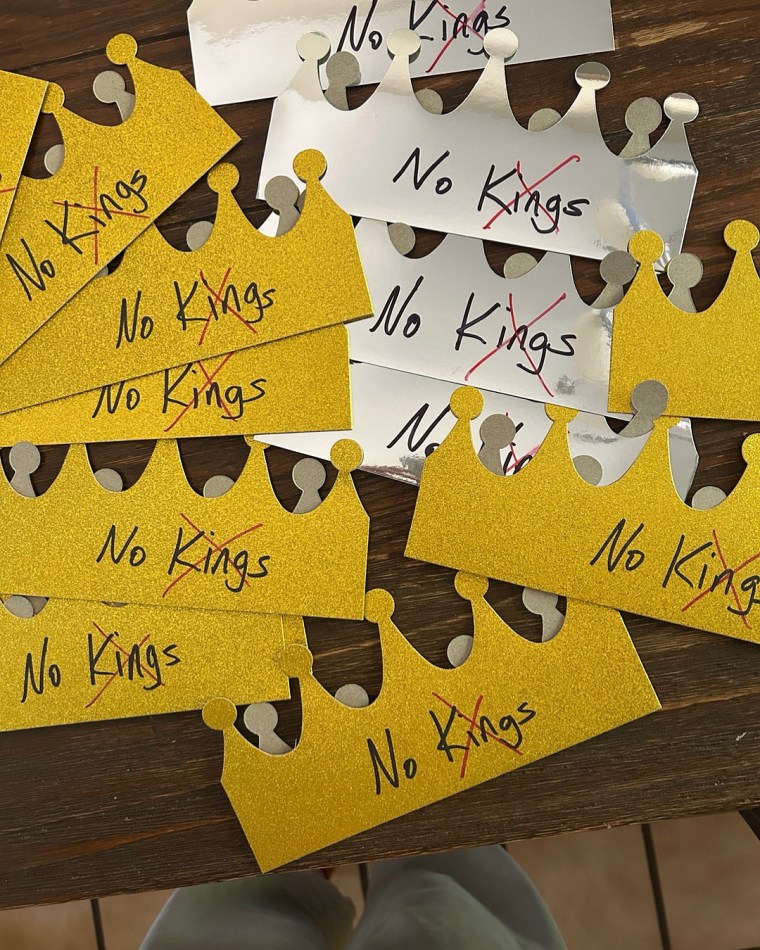
Trump was mad a Stephen Colbert so he had him fired for his politics. Trump, or the FCC, was mad a Jimmy Kimmel, so they fired him for his speech which they called political. I’m mad that so much power rests in one politician’s hands that he can quell speech. I understand that yes, in a capitalist economy, there are consequences for what one says, which isn’t the same as denying free speech. But if you and your buddies are buying all the media outlets AND firing people for speaking their own thoughts, that is tantamount to suppressing free speech.

I do feel for Tyler Robinson who shot Charlie Kirk. I feel badly for Charlie Kirk even though I thought he was a bully. I feel bad about Melissa Hortman, state legislator, her husband and her dog who were shot in Minnesota. I feel bad for the professor at Ball State for saying that she was sorry Kirk was killed but that he himself did sow violence. I feel bad for political violence. I feel for all the kids who are made constantly mad. I feel for the kids who are mad but say they’re not political. Politics is everything and everything is maddening? Who can tell the difference between politics and anger?

The question is, what to do with this madness? I was talking with a friend last week as we listed all the horrors. She asked how come I didn’t sound upset. I told her I was upset but that I spend so much time being upset, I have my anger pretty measured by now. As you can see from above, I spend a lot of time thinking how little actions like driving two-stroke jet skis contribute to global warming—as if one individual action can have planetary consequences. Climate Change, like social media, makes us think broadly and also angrily. The only solution I can find is, ironically, in the opposing premise above: I do think one action can have planetary consequences. Or, rather, I do think local action can make a difference. Or, if nothing else, is the antidote to anger. Every action I’ve taken (as opposed to internet scrolling or news reading) has lessened the anger. From delivery food at the Food Center to marching at the protests, from writing fact-filled postcards about the Big Beautiful Bill to collecting clothes for people in Ukraine, when I’m doing something locally, even if it’s for global causes, I’m less mad. And truly, none of these things is really political. Most of us, on the ground, are just working to make as many things better as we can. Even those who really just want to ride 100-foot waves. I’m sure if I were in Nazaré, Portugal and met the people who worked in the city, I would probably even learn to like the boats. (Also. I canceled Disney and Hulu because they fired Jimmy Kimmel. Anger has its place!)