
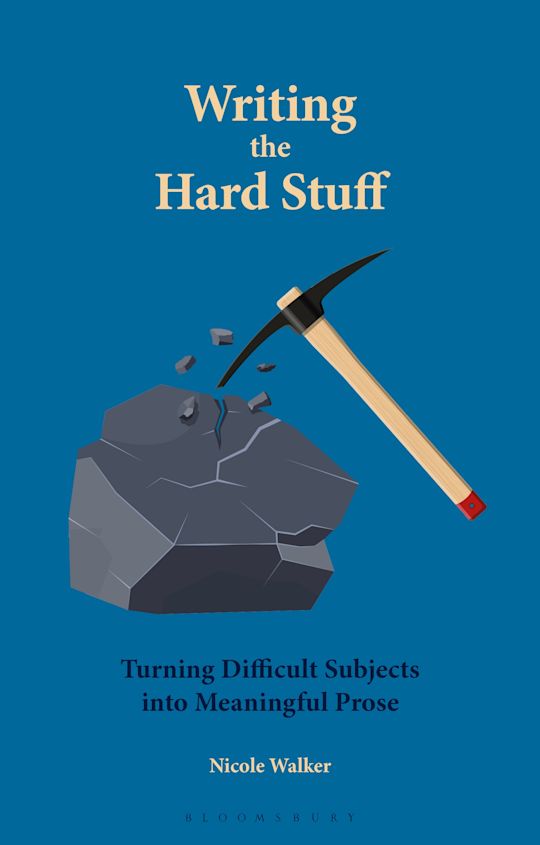
I live a pretty privileged existence. Today, for example, I woke up at 7. Drove my son to school, ran my dogs, came home to host a couple of Zoom meetings, made lunch from leftovers I’d cooked the night before, emailed my friends at other universities about to recruit undergraduate student to our Masters of Fine Arts program here at NAU, finished proofing my book, Writing the Hard Stuff: Turning Difficult Subjects into Meaningful Prose, then sat down to write this column. Who has time to write in the middle of the day, you might ask. Writing is, actually, part of my job. Writing is hard. It should be easy but you have to think about premises, themes, sentences, arguments, audience, images, word choice—it’s like juggling 16 balls in your brain. After I finish writing, I will prep for class and send 14 more emails. And then, I will grade and give feedback to manuscripts. After that, I will teach a class where my graduate students and I will discuss premises, themes, sentences, arguments, audience, images, word choice of their essays for three hours. My job is hard and fun and I am very, very lucky to be able to do this work.
The Washington Post, which has become increasingly conservative since Jeff Bezos became the owner, published an article with the title The Sweetheart Deal for Academia is Over. Since I canceled the WP right a year ago, I couldn’t access the piece, but I could imagine what it said. Something like, universities are socialist systems that support research no one cares about and that teachers don’t teach enough and they’re separate from the communities in which they are ensconced. Not that these people didn’t go to college. It’s an “education for me, not for thee” kind of reporting.
Legacy media has targeted universities so long and so unvaryingly that real trust in higher education has slipped. At a presentation by the Dean of College and Letters, Dr. Julie Piering reiterated that slip saying that in recent polling nearly two-thirds of Americans don’t believe that the cost of higher education is worth it.
Grim news.
But, she said, if you flip the question and ask, do you think a college education benefits society, the numbers flip as well. Two-thirds of people do believe that a college education betters our communities.
Sometimes, universities don’t communicate what they do very well. Mainly, because universities try to speak as one monolith. Universities do so many different things toward different goals, it feels nearly impossible to account for them all. Recent funding cuts have revealed some stark realities: funding for Alzheimer’s, Parkinson’s, and child cancers was slashed in the early part of the year. Many of the medicines we rely on come from university research. Even if people are unaware of how much influence colleges have on health care, once you make a list, it’s pretty easy to say, OK. STEM folks. You make sense. Science, Technology, and Engineering? We do like computers that go fast and buildings that stay standing. Math? Well, you wouldn’t want people to just go to school for STE programs.
Sometimes, people use the acronym STEAM to include the arts, which I appreciate. But we in the rest of the college need more letters than that. Education. Philosophy. Psychology. English. History. Perhaps we could use the heading Humanities, Art, and Social Sciences but even that feels too wide. Psychology may be more obvious as to its use, whereas dance may less clear, but the arts and humanities inform nearly every element of our lives—from movies and TV shows we watch, video games we play, concerts we attend, NFL halftime shows (dancing AND singing). If we find the technology behind computers useful, what we use the computers to do—watch art (film, shows,), study texts (all I do all day is read manuscripts), and try to make Facebook and Instagram posts that people see (It takes a special combination of artistry, marketing, and rhetorical skills to get your one line of prose to be liked, or even loved), write, make reels, make films, make posters and flyers for people to attend all the cultural events that the College of Arts and Letters produces each month from plays, poetry readings, visiting lectures, piano recitals, dance performances—the stuff that enriches our lives is the stuff we use STEM for—we need to use the STEM to get to what we want to see and create and produce. And, if you need numbers to correlate to meaning, according to Arizona’s Commission on the Arts, in 2023, arts and culture contributed $15.8 billion to the economy. Art is work. And economically fecund work at that.
If universities are getting more expensive, it’s because, in Arizona at least, the state only provides 12% of its funding. The rest is either raised through foundation campaigns or paid for by tuition. If we went back to funding universities as we did in the last century, tuition would be so inexpensive, it would be silly not to attend. I still think it’s smart to go to college—another number? A person with a bachelor’s degree can earn significantly more than someone with only a high school diploma, with some estimates suggesting a 61% to 86% higher annual income, or a lifetime earnings premium of over $1.5 million. Plus, we teach students how to adapt. Their critical thinking skills helps them pivot to a different career. Some folks with STEM degrees might have to start over.
I don’t want academia’s “sweet deal” to end. I want the opposite. I want everyone to have a sweet deal. I want everyone’s work to be meaningful to them. I want everyone to have a flexible schedule and sometimes work from home. I want everyone to do their “art,” and be supported for it. I want everyone to be able to do work that is both fun and hard. Instead of making sure everyone is miserable, maybe we could find a way to privilege everyone.
 Nicole Walker
I want to privilege everyone too. What a way to flip that term!
Andrea
Sent from my iPhone
LikeLiked by 1 person