
It’s a hard world. It’s impossible to think about books as an entity while the world is in such deep trouble. But the inside of books. That’s where the trouble gets its due. I’m in the middle of book edits with my collaborator, David Carlin, on our book called The After-Normal. It’s about climate change and how we try to hang together as we watch the world, so slowly, fall apart. And then we try to imagine–hey, there are ways the world puts itself back together. You’ve got to imagine both sides of the trouble to get through the day.
Author: Nicole Walker
Writer of 8 (weird) books. New book, Writing the Hard Stuff, forthcoming from Bloomsbury. Trying to withstand the onslaught of fascism by building community. Prof, Nonfiction Editor at DIAGRAM and UGA Press's Crux series.
Sustainability: A Love Story
Forthcoming from Ohio State University Press in October, 2018. 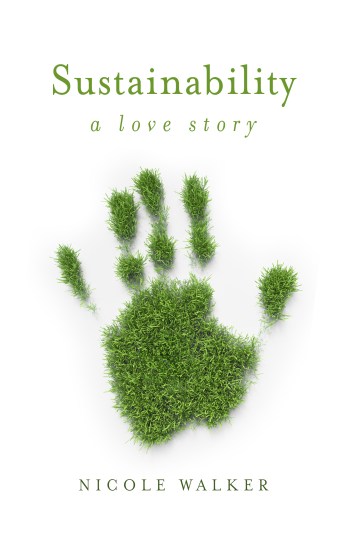
Author Bio
Nicole Walker is an Associate Professor at Northern Arizona University, the author of Egg and Where the Tiny Things Are, and co-editor of Bending Genre: Essays on Creative Nonfiction.
Full Description
In Sustainability: A Love Story, Nicole Walker questions what it means to live sustainably while still being able to have Internet and eat bacon. After all, who wants to listen to a short, blond woman who is mostly a hypocrite anyway—who eats cows, drives a gasoline-powered car, who owns no solar panels—tsk-tsking them? Armed with research and a bright irony that playfully addresses the devastation of the world around us, Walker delves deep into scarcity and abundance, reflecting on matters that range from her uneasy relationship with bats to the fragility of human life, from adolescent lies to what recycling can reveal about our not so moderate drinking habits. With laugh-out-loud sad-funny moments, and a stark humor, Walker appeals to our innate sense of personal commitment to sustaining our world, and our commitment to sustaining our marriages, our families, our lives, ourselves.
This book is for the burnt-out environmentalist, the lazy environmentalist, the would-be environmentalist. It’s for those who believe the planet is dying. For those who believe they are dying. And for those who question what it means to live and love sustainably, and maybe even with hope.
The Lost Origins of the Publishing Contract
On Facebook, it must look like all I do is write a book on Saturday and then on Sunday, find a publisher. This August, I posted about Egg, which came out in March from Bloomsbury and had some good success but then got a one star review on Amazon. I told Facebook. Lots of people posted nice things about Egg. And then in late September, Where the Tiny Things Are came out from Punctum Press. I’d just had an Egg party at Lawrence and Andie’s in April (for Easter!) and one for Micrograms in October last year. I didn’t really think that I should have another book party. But my dear friend wanted to throw one with my birthday party and I do love birthdays, parties, and books. So I was game for that. Then, the cover for Sustainability was released! That book doesn’t come out until next year but the cover. I had to share it. Then, Love in the Ruins: A Survival Guide for Life after Normal won an open reading contests with Rose Metal Press. It has been fun and wild and a little bit shy-making. It does seem like a lot of books at once.
But the real story is much longer and darker. I finished my first book of essays, Quench Your Thirst with Salt, in 2007. I found an agent, Malaga Baldi, who almost sold it to Bellevue Literary Press but the editor there asked me to write a new introduction and I must have screwed that up royally because the book did not sell. Then, I sent it to the Graywolf Nonfiction contest where it was a finalist with three other manuscripts. Instead of choosing one of those, Graywolf chose to publish my good friend Ander Monson’s book Vanishing Point. Milkweed liked it but it wasn’t environmental enough. A year and a half goes by. I send out. I get rejected. In September, 2011 I get a call from Amy Wright at Zone 3 Press to say I had won their creative nonfiction contest. A full four years after I had that first nibble from Bellevue.
In November 2014, on my birthday, I got an email from Graywolf about my book Sustainability: A Love Story. I was again a finalist but again they went a different direction. I was in Denver at the Art Museum. I cried in the gallery. Failure is the genesis of success. I got mad and wrote the rest of the book. My agent, Malaga Baldi, sent it to Milkweed and a number of other places but in between, I’d been invited to submit it to Ohio State University’s new imprint, Mad Creek books. They took it! Meanwhile, I’d been invited to submit a proposal for Egg. It was rejected! Again, I got mad. I wrote the rest of Egg. I resubmitted my proposal.
Where the Tiny Things Are was a finalist for the Cleveland State University Press’s open nonfiction contest in 2015. I wrote the book in 2010. An editor at Soft Skull Press said they would probably take it and then she ghosted me for a year. I published each part in chapbooks including the tiny essays in a chap collection called Micrograms. I was sheepish putting out the Where the Tiny Things Are–this collection of really long essays about Microclimates, Micropreemies, Microorganisms that help repair polluted water, wine growing in Arizona and The Micromanagement Era of the Distracted parent because it had been published in its constituent pieces. This book is with Punctum Press. I am so sheepish I’m having a hard time getting the word out about this one but I want to support the press and I want people to read the book so I’m going to stop with the sheep and say, yay! Thank you, Punctum Press and thank you Erik Sather who is making a companion film for the book which I hope helps the book to sell.
Love in the Ruins: A Survival Guide for Life After Normal is a collection of short essays by me and David Carlin.It’s an abecedarian–a, b, c, d, e. We wrote an essay a week starting with A (Albatross and Atmosphere) and then sent it to the other person to read. We finished in 26 weeks. We revised. It is incredible how fast Rose Metal took it but that never happens. I have novels I’ve never published. I just got three rejections in one day from my new project. I write every day not knowing if this project is going to make it or not. I have been so lucky. Maybe my luck will run out. Maybe my writing won’t be interesting to people. Maybe I’ll never win a big award for my book. But I really, really love what I do even if failure is written into doing it every step of the way.
Absolutely True Diary of a Part-Time Indian
It’s our first Book Club book. Read along. Comment below!
Book Club
I was telling my students about the U Penn class called Existential Despair where students come to class on Tuesdays at 5:00 p.m., turn in their phones, grab a book, and read it for seven hours. When I was twelve years old, I read for seven hours straight. As a grad student, I probably read for seven hours straight, when I was in the pit of despair in 2014, I read all the Harry Potters in a row, which probably took seven hours straight but I have not read big chunks in a long time. My students want to read more but, they said, I just want to know what to read. I said, I get that. That’s why I went to grad school.
But I promised them a book club that would go beyond our semester together in Intro to Creative Nonfiction and so I’m going to organize it here. We can post comments back and forth. Maybe I’ll make a page per book but for now, I’m going to start with a list of books and the order in which we’ll read them. Anyone can opt in or opt out but I’ll be here, reading these books along with you. Or them. Or you and them. And me.
The Absolutely True Diary of a Part Time Indian Sherman Alexie
The Brief Wondrous Life of Oscar Wao Junot Diaz
Me Talk Pretty One Day David Sedaris
A Heartbreaking Work of Staggering Genius Dave Eggers (another reason why I write nonfiction)
One Hundred Years of Solitude Gabriel Garcia Marquez
Kitchen Confidential Anthony Bourdain (one reason I cook and write and write about Eggs)
Another Bullshit Night in Suck City Nick Flynn (the other reason I write nonfiction)
Even Cowgirls Get the Blues Tom Robbins
Their Eyes Were Watching God Zora Neale Hurston
Diary of Anne Frank Anne Frank
Refuge Terry Tempest Williams (one reason I write nonfiction)
A Visit from the Goon Squad Jennifer Egan
A Power Point for Egg
 egg and beauty
This presentation can be read along the last essay in the Egg book from Bloomsbury–The Present was an egg laid by the past that had the future inside its shell.
Braided Essays
I turned the talk I gave last year in Melbourne into an essay for Creative Nonfiction magazine. Now, I’m kind of obsessed with braided essays and am looking forward to working with my colleague, Gretchen Younghans, who teaches at Flag High. As part of the Alpine program, she and I and a few grad students are taking her Alpine students out to Clear Creek Reservoir to kayak and write.
I suggested we do a braided essay exercise where the students make observations about the tiny things, the mosquito hawks on the surface of the water, the kinds of graffiti on the rocks, the spinning leaves, the wind broken trees. Then, when we take a break for lunch, the students will use their observations as one thread of their essay. Then, they’ll switch to writing a personal narrative that uses scene and dialogue to really root us in their experience–they could write about their emotional experience being on the lake, they could write about a past memory of another lake, they could write about their childhood kitchen or the time they dropped their school lunch on the lunchroom floor and everyone laughed. After five minutes of personal narrative, we’ll ask them to return to their “research,” again dispassionately describing what they saw. Then, after five minutes, we’ll ask them to return to their personal story finishing, for now, this process.
In revision, what the students might discover is how certain word choices, images, or motifs appear in all four sections. To make those synchronicities stronger, the students can emphasize them by writing a little more, and a little more slowly, around those repeated moments. They can change some words so more words do repeat. And, they can see how, by putting these two seemingly random stories together, they learned more about themselves and the place they visited by pressing the two so closely together.
In order to give the students a sense of what these essays might finally look like, here are some examples.
Brenda Miller’s Swerve
Lee Ann Roripaugh’s The Wardrobe’s Best Dressed
Nicole Walker’s Everyone Wants to Be a Brine Shrimp
Matthew Komatsu’s When We Played
The above essays show how moving from topic to topic between paragraphs can provide multiple perspectives on the same topic like a prism. The following essays, though longer, provide that true braid where the back and forth phenomenon leads to a new and integrated understanding of the subject.
Chelsea Biondolillo’s How to Skin a Bird
Nicole Walker’s Abundance and Scarcity
Joann Beard’s The Fourth State of Matter
Eula Biss’s Time and Distance Overcome
The Braided Essay
Creative Nonfiction Magazine just released an amazing issue called Adaptation. Essays by Sarah Minor, Lawrence Lenhart, Elizabeth Bobrick, Renee D’oust, Itzel Basulado Murillo, Hope Wabuke and many others. I am amazed how many essays Hattie Fletcher was able to pack into this issue. I’m teaching from the magazine this fall because it strikes two of the topics I want to cover: how to write about adaptation, especially as we confront climate change, and how braided essay is a form of political resistance. Hattie was kind enough to make the essay I wrote for the magazine available not only in the print issue but on their website. Check The Braided Essay out here.

Squids Are Egg People Too
How We Speak to One Another
Dear Governor Ducey,
I’m at the Tucson Festival of Books at a workshop teaching people how to write letters to Governor Ducey.
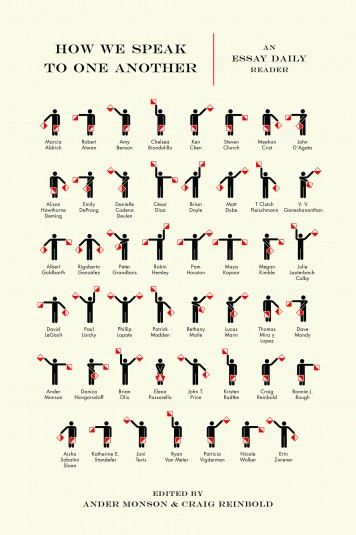
Not really. Actually, we are in a session called How We Speak to One Another—an Essay Daily Event named after the anthology Ander Monson and Will Slattery put together from essays we wrote on the Essay Daily Website.
The idea behind the workshop is to suggest to students that one of the most generative forms of writing is the letter. This is an idea I can get behind since this is letter #115 in the series of letters I’ve been sending you for two years now. I told the students that a primary catalyst for writing is being mad enough to write a letter to the editor. Admittedly, sometimes I talk myself out of being mad as I write. Usually, I spend enough time in the letter to lose some of the vitriol and start imagining how you would take my argument. By the time I start talking about my kids, I am thinking about your kids. By the time I start explaining how much my students mean to me, I think of you as a student, how you must have had one or two teachers who made an impact on you. The letter writing is generative but it generates toward empathy. By the time I’m at the end of a letter, the thought of you has flowered in my heart.
The students were receptive, immediately putting pen to paper. Ah, how I love to teach. I I love to convince people to act. The smallest detail the writers could think of the better. Perhaps this is a little meta but, to give an example of how the small detail brings us together, remember the letter I wrote to you about fractions? Remember the one about dog hair? The one about fly fishing? Oh, dear Governor, almost any small detail of the word reminds me of how I want you to act. Maybe one day you’ll put pen to paper to write me back and although you might be mad at me in the beginning, perhaps by the time you get to word 363, you will begin to soften. Think of where I’m coming from. Perhaps get a little behind my point of view.
The students wrote letters to the board of directors and to ABOR and to the writers of Disney fairy tales. They wrote letters to Stephanie Meyers and to the Three Little Pigs. To get people to write when they don’t know me, when they could have a hundred better things to do on a Saturday. It’s inspiring. The whole Tucson Festival of Books is inspiring. Tent after tent of book publishers. Hundreds of people milling about, listening to writers, talking to each other, buying books. NPR is broadcasting live. The Tucson Book Fest is the third biggest in the country. Thousands of people descend on Tucson, spending money, buying art. The Northern Arizona Book Festival might be one of the smallest in the country but we still bring in a thousand people to downtown to spend money, to buy art.
So much of the work behind these festivals is volunteer work. I sometimes wonder, Governor Ducey, if you think people who volunteer are nuts. Why would people put on workshops, host guest writers, put together panels for free? What is in it for us? I think the same thing is in it for us as is in it for you. To make the community a better place. It’s our definition of ‘better’ that differs but still, I can imagine you don’t want books and art but you must love people to buy stuff. I imagine that as subversive as art may be, the money people spend is as ideologically acceptable as any other money spent on food and drinks and hotels. Sometimes, the National Endowment for the Arts gives seed money to book fests–not enough to replace all the volunteers with working positions but enough to pay for some big name writers and some committed organizers, enough for the seed to secure itself and for those volunteers to come in and help it bloom. Without the seeds, there are no flowers of art or flowers of money and I know that although you may say you don’t need the former, the latter is where your heart lies. If you have any say in saving the NEA, I ask you to follow your flowering heart.
 Nicole Walker