
https://substack.com/visited-surface-framehttps://substack.com/session-attribution-frame

Nikwalk’s Substack
1
Slow Growth and Lightning
How ideas develop in writing
Aug 04, 2026
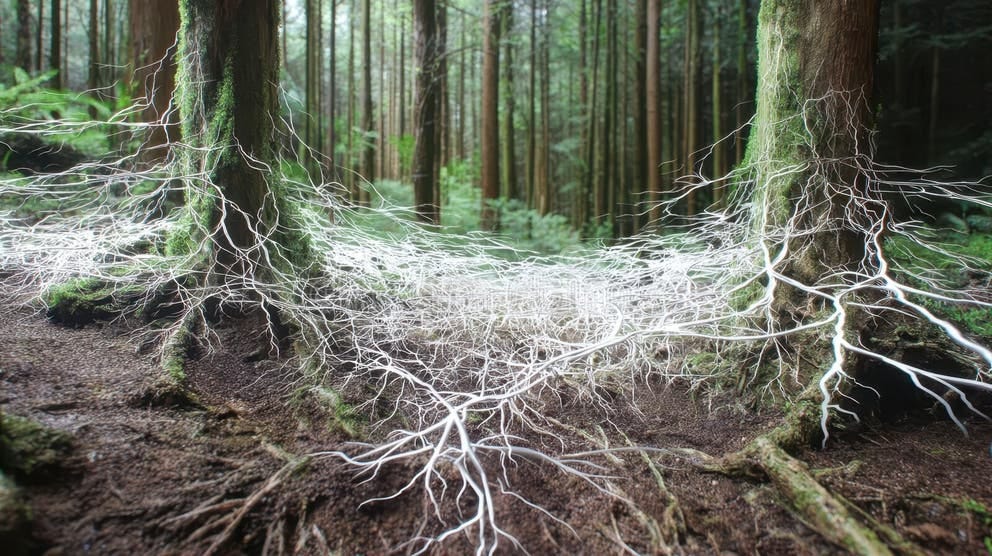
I’ve been asked a few times how I made the connection between my personal story and the world of the forest in How to Plant a Billion Trees. The metaphors are thick. I compare the mycelia underground the forest floors from which mushrooms burst as the net that provided safety from falling into full complete disaffection from family and society. I draw the way trees communicate into the metaphor of how community builds across entities. I describe the usefulness of bullshit (stories! Weird boyfriends!) to growing new, fertile mushrooms. Max and his experience at a day care becomes a story about pine beetles. The Respiratory Synctial Virus (RSV) and the difficulty it caused her breathing parallels the story about how forests as struggling lungs.
But that’s not how the book began. My mom’s friend, Kathy, wrote a note to my mom that asks the question most succinctly. “Her juxtaposition of the natural world in the narrative is so creative & apt. I’m curious if this perspective developed gradually over time or whether it was a sudden insight at some point. I hope sometime you & I can talk about it. Thank you for trusting me with it!” Of course, I want to answer that it was both a slow gathering of ideas and an immediate Eureka moment. Not sure I can have both, but, as with metaphors, it’s worth a shot.
I had been writing a book about apple trees and school choice. The original title was called “Stunted.” It was about being short and apple trees. It began:
Apples do not grow on vertical branches. You must stake your trees if you want to teach the tree to support fruit. Shoots stemming up around the apple tree will not go on to become productive trees. The kind of apples we eat don’t grow on Native American trees. In order to grow a Red Delicious or a Honeycrisp, you need to graft a scion, a cutting from the delicious Asia Minor immigrant onto the American-ground-capable rootstock. Crabapples trees are native to the US. Crabapples can be delicious with sugar, in a jelly. Red Delicious apples can be awful. Perhaps you think the flavor is thanks to the decisions you, dear pruner, make. As you know, when you cut one branch away, you make room for more leaves and fruit. But regardless of your incessant trimming, during the winter, while the snow buries roots and shoots, the tree still grows in directions the pruner cannot predict.
I did a lot of research into apples and apple farming and school choice. This listing action shows up in the middle of the now-discarded book:
You think you know a lot about apples. You worked at the Oregon Winegrowers Association. You know a lot about grapes. You know there are a bunch of varietals. You love pink lady and Rome—so much better than Red Delicious. You know to use Granny Smith in pies, Honeycrisps go mushy. When Portland Nursery on SE 50th and Stark hosts an apple tasting festival in the fall, you realize you know nothing about the number of kinds of apples. Presented in alphabetical order, you think OK, one variety per letter, excepting the tricky ones like K and X and Z.
But when you get to A, you realize how much you don’t know. The letter A alone had seven representatives, just here at the festival. And not all the apples showed up. The Arkansas Black A long-keeping tart apple from Arkansas, USA – which goes almost black in to the Allington Pippin, a versatile English apple, with a strong pineapple-like flavour, useful for both cooking and eating. Then you find the Antonovka, a popular small green culinary apple variety from Russia. Also of importance as a rootstock because of its ability to tolerate extreme cold. See: Ashmead’s Kernel Apple, A very old apple variety, with a drab appearance which belies a unique peardrop flavour. Ashmead’s Kernel is also one of very small number of English apple varieties that also thrives in North America.
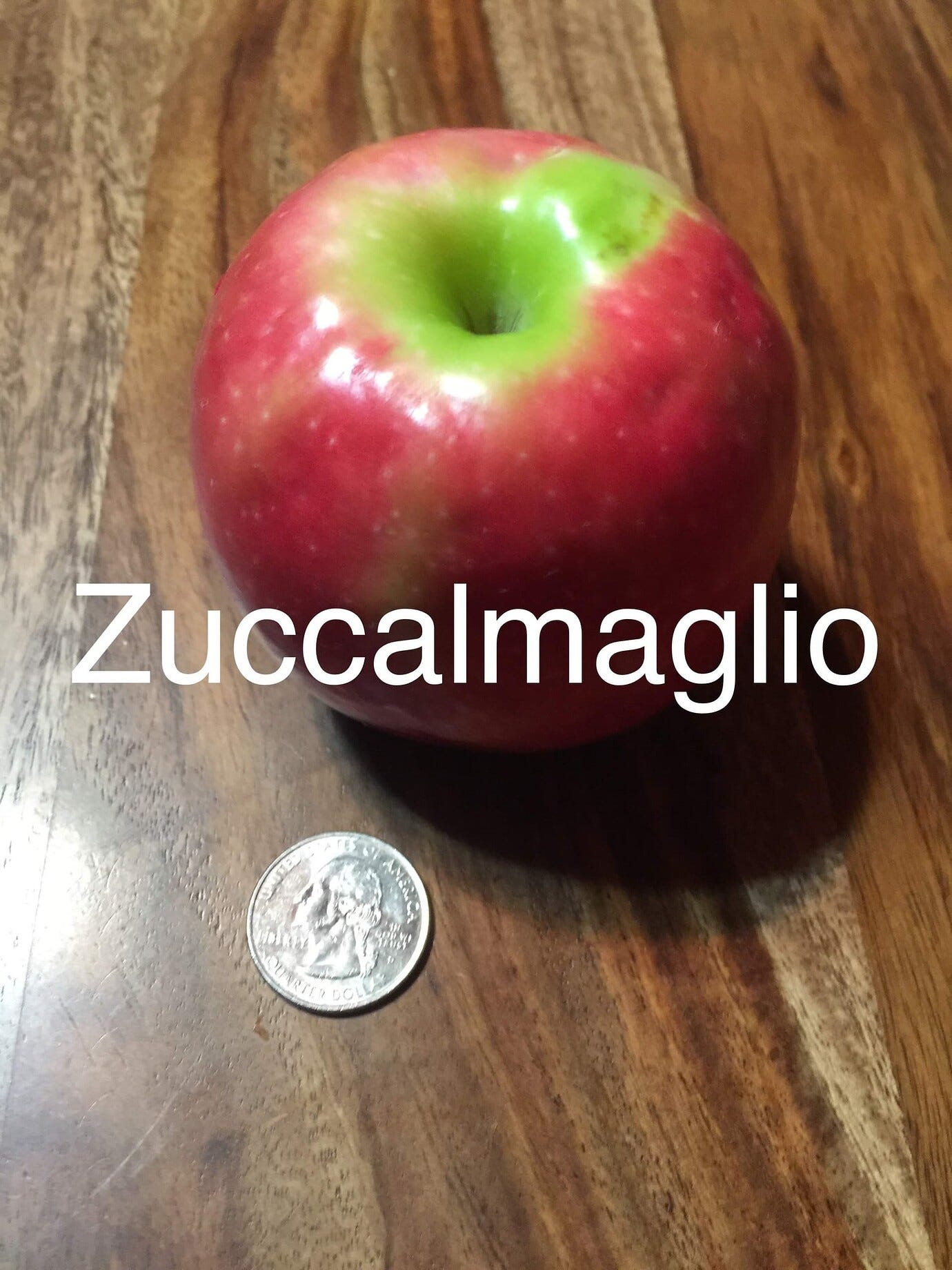
Pop down to Z, where you were sure there were none and here you find many, including Zuccalmaglio’s Reinette apple: Flavored with tones of wild strawberry, quince, pineapple, ripe pear and a fine floral touch. Rough sticky skin flushed brown-red with faint red stripes and some russeting. Fine grained flesh.
I then launched into a series of essays about school choice, its history, and the importance of public schools as the knit through which strong communities grow. A Billion Trees has very little resemblance to that book (although it would be fun to reread A Billion Trees palimpsest like to see if there are any signs of Stunted Below). But there is a connection. Similar to how tree communities grow by relying on each other and affording each other nutrients through these complex, underground, microscopic threads, communities grow in similar ways. Taking the idea of public schools as the mycelia that ties a community together, I expanded my vision so that, in the end, Flagstaff, NAU, the U of U, college, and my family became evergrowing systems of care and concern that brought what might have been abject me forever back into the fold.
The eureka version has more to do with the New York Times essay that came out in August of 2022, My Abortion at Age 11 Wasn’t a Choice. It Was My Life. After the Supreme Court overturned Roe versus Wade, I realized that I had to write about what happened to me. I was also, at the very same time, working on my husband’s campaign for school board. As we canvassed door to door, I imagined these tiny threads spoiling out from the back of my shoes, tying the people of our town together.
I love serendipity. It feels surer than most things. It’s nearly magic. I picture Remi from Ratatouille when he combines brie with a chanterelle. Lightning! (Also, how serendipitous the ratatouille has the word rat in it. I wonder if the writers began with the idea of rats or of the signature French dish and worked it out or if they had the genius-moment of thinking of both at the same time?) But, behind serendipity is a lot of work and some of it goes nowhere. I published nothing from Stunted. The apple part is OK but the school choice stuff comes off as preachy, which makes me shudder. I don’t want to preach! I just want to notice and reveal and make these wild parallels that maybe, at least some of the time, combine like lightning when someone reads the book and gets the lightning moment too.
Also, it’s pretty sweet that my mom’s friend appreciates my mom for trusting her. I appreciate my mom too for being the first node in that web of support that kept me from falling all the way down.

